Travelling Morocco well means leaving it better than you found it: supporting local guides and artisans directly, bargaining and tipping fairly, conserving scarce water, declining animal exploitation, respecting local customs and faith, and treading lightly in the desert and mountains. This practical guide sets out how to make your trip a force for good for the people and places that make Morocco extraordinary.
In this guide
Put your money in local hands
The single most powerful thing you can do is direct your spending to the people who live where you travel. Hire local, licensed guides — they hold official credentials, know their cities intimately and depend on tourism for their livelihood — and choose locally owned riads, guesthouses and restaurants over faceless chains where you can. Eat where Moroccans eat, and your money circulates in the community rather than leaking straight out of it.
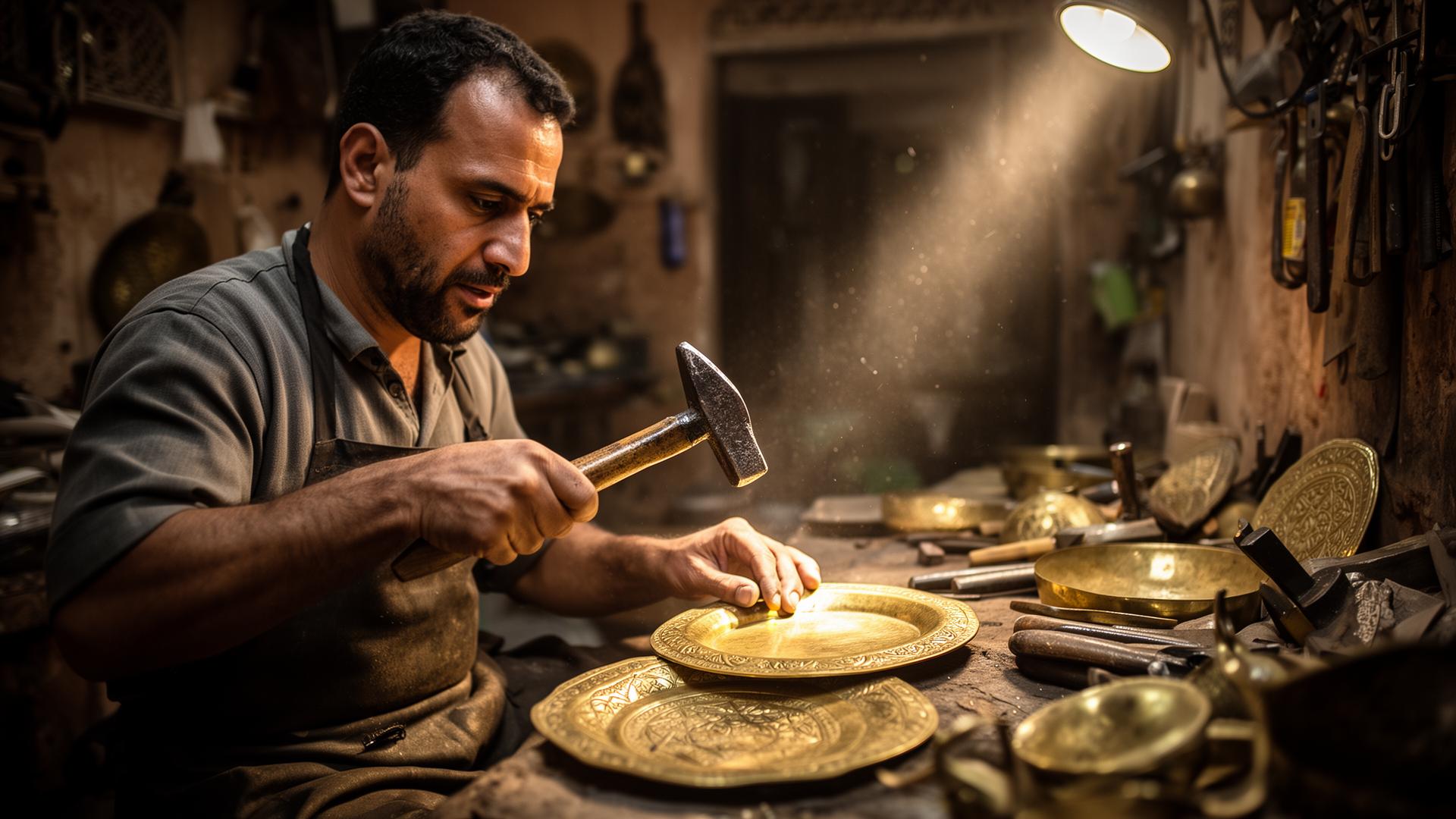
When you buy crafts, buy direct from the maker wherever possible: a potter in Fes, a weaver in the Atlas, a leatherworker in the tanneries, or a women's argan cooperative in the southwest. Genuine argan cooperatives — many run by and for rural women — return income directly to the producers and offer some of the most meaningful purchases you can make; buying from them supports women's economic independence in the countryside. Be aware that some roadside 'cooperatives' are commercial fronts, so look for established, recommended ones.
- Hire local, licensed guides — verify their official credentials.
- Favour locally owned riads, restaurants and shops to keep money in the community.
- Buy crafts direct from artisans; choose genuine women's argan cooperatives.
- Be wary of roadside 'cooperatives' that are commercial resellers in disguise.
Bargain and tip fairly
Bargaining is part of souk culture and is expected, but keep it good-humoured and proportionate. The aim is a price both sides are happy with, not to grind a craftsperson down to nothing over a sum that is trivial to you but meaningful to them. Walk away politely if you don't want to buy, and never start haggling hard for something you have no intention of purchasing — it wastes the seller's time. A fair deal, struck with a smile, is the respectful goal.
Tipping (the pourboire) is woven into Moroccan service culture and matters to people whose wages are modest. Tip guides, drivers, riad staff, porters and waiters; round up and add a little for good service. Carry small notes and coins so you can tip easily. At the same time, you are not obliged to pay for unsolicited 'help' you didn't ask for, and giving money or sweets to children who beg is best avoided — it encourages them out of school; support a reputable local charity instead.
- Haggle with good humour and a sense of proportion; a fair price beats the lowest price.
- Don't bargain hard on things you won't buy.
- Tip guides, drivers, staff and waiters; carry small notes and coins.
- Avoid giving cash or sweets to begging children; donate to a reputable charity instead.
Respect Morocco's water scarcity
Morocco is a water-stressed country and the pressure is intensifying — recent years of drought have lowered reservoirs and strained supplies for farming and rural communities. As a visitor you use far more water than you might at home, in showers, pools and laundry, so conserving it is one of the most concrete responsible choices you can make. Treat water as the precious, finite resource it genuinely is here.
Keep showers short, reuse hotel towels and linens rather than having them changed daily, and don't leave taps running. Be mindful that swimming pools and lush hotel gardens in arid regions carry a real water cost. Small habits, multiplied across many travellers, make a meaningful difference to communities for whom water is a daily concern.
- Take short showers and turn off taps; every litre counts in a water-stressed country.
- Reuse towels and bed linen instead of daily changes.
- Be conscious of the water cost of pools and irrigated gardens in arid areas.
- Refill a reusable bottle (with safe/filtered water) to cut plastic as well.
Animal welfare: say no to exploitation
Some of Morocco's most photographed scenes involve animal suffering, and the kindest thing you can do is refuse to pay for them. In Marrakech's Jemaa el-Fna square, Barbary macaques are kept on chains and snakes are charmed and handled for paid photos. The macaques are a vulnerable species taken from the wild, and both they and the snakes are kept in conditions that cause real distress; every dirham paid for a photo funds and perpetuates the trade. Politely decline, and don't be drawn into a quick snapshot that will land you with an aggressive demand for money.
Apply the same principle everywhere: decline rides or photos with any chained, overloaded or visibly mistreated animal, and choose working animals — such as camels and mules on treks — only through operators who keep them in good condition, well-fed, rested and not overburdened. A reputable desert or mountain operator will be visibly proud of how its animals are treated. Your custom rewards the businesses that do right by them.
- Decline paid photos with the Jemaa el-Fna Barbary macaques and snakes — it is a welfare issue.
- Refuse rides or photos with any chained, overloaded or mistreated animal.
- Choose trek and desert operators who keep camels and mules well-fed, rested and healthy.
- Never feed or handle wild macaques (e.g. in the Middle Atlas cedar forests).
Respect dress, customs and Ramadan
Morocco is a Muslim country with deep-rooted customs, and a little cultural respect goes a long way. Dress modestly, especially away from the resorts and in rural areas and religious sites — covering shoulders and knees is a sensible baseline for everyone. Always ask before photographing people; many, particularly older people and women, would rather not be photographed, and a smile and a request (or a small agreed tip for posed shots of, say, a craftsperson) keeps the encounter respectful. Note that most mosques are closed to non-Muslims — the Hassan II Mosque in Casablanca is a notable exception that welcomes guided visits.
If you visit during Ramadan, be considerate: many locals fast from dawn to dusk, so avoid eating, drinking or smoking conspicuously in the street during daylight, even though tourist riads and restaurants continue to serve you. Daytime energy is lower and hours shift, while evenings come alive after the fast is broken. A respectful, patient traveller is always welcomed warmly in return.
- Dress modestly, especially in rural areas and at religious sites — cover shoulders and knees.
- Ask before photographing people; respect a no.
- Most mosques are closed to non-Muslims; the Hassan II Mosque welcomes guided visits.
- During Ramadan, avoid eating, drinking or smoking openly in the street by day.
Tread lightly: deserts, mountains and community tourism
Morocco's wild landscapes are fragile, so follow Leave No Trace principles: take all your litter out with you (including from desert camps and mountain trails), stay on established tracks to avoid scarring the dunes and hillsides, and never remove fossils, plants or rocks. Quad bikes and off-road driving churn up and damage the desert and disturb its quiet — a gentler footprint leaves the Sahara as you found it. Choose desert camps that manage waste and water responsibly and treat their staff and animals well, rather than the cheapest option that cuts those corners.
Finally, seek out community-based tourism: guesthouses, cooperatives and treks run by and benefiting local villages, particularly in the Atlas and the south. Homestays, village-run lodges and locally guided treks spread tourism's income to rural communities that need it most and give you a far richer, more genuine experience. Travelling responsibly in Morocco isn't about doing less — it's about making the same trip count for more.
- Leave No Trace: carry out all litter, stay on tracks, take nothing from the land.
- Avoid quad bikes and off-roading that scar and disturb the desert.
- Choose responsible desert camps that manage waste, water, staff and animals well.
- Favour community-based tourism — village homestays, cooperatives and locally run treks.
Frequently asked
How can I travel responsibly in Morocco?
Put your money in local hands: hire licensed local guides, stay in locally owned riads, and buy crafts direct from artisans and genuine women's argan cooperatives. Bargain and tip fairly, conserve scarce water, decline animal exploitation such as paid photos with the Jemaa el-Fna macaques and snakes, dress modestly and respect local customs and Ramadan, and tread lightly with Leave No Trace in the desert and mountains.
Should I take photos with the monkeys or snakes in Marrakech?
No. The Barbary macaques on Jemaa el-Fna are a vulnerable species kept chained, and the snakes are handled in distressing conditions, all for paid photos. Every payment funds and perpetuates this animal exploitation. Politely decline, and avoid being drawn into a quick snapshot that ends in an aggressive demand for money.
Is water scarce in Morocco?
Yes. Morocco is a water-stressed country and recent droughts have strained reservoirs and rural supplies. As a visitor you use far more water than locals, so keep showers short, reuse towels and linen, turn off taps and be mindful of the water cost of pools and irrigated gardens. It is one of the most concrete responsible choices you can make.
How do I buy from argan cooperatives ethically?
Look for established, recommended women's argan cooperatives in the southwest, which return income directly to rural women producers and support their economic independence. Be aware that some roadside 'cooperatives' are commercial resellers in disguise, so choose a genuine, well-regarded one and buy direct from the makers.
What should I know about visiting during Ramadan?
Many Moroccans fast from dawn to dusk, so be considerate: avoid eating, drinking or smoking conspicuously in the street during daylight, even though tourist riads and restaurants still serve you. Daytime energy is lower and hours shift, while evenings come alive after the fast is broken. A patient, respectful traveller is always welcomed warmly.
Planning a trip?
Let a Marrakech atelier handle the details.
Tell us your dates and style and we'll send a written itinerary and a transparent quote within 24 hours.
Request an itineraryKeep reading
Culture
Morocco Etiquette & Customs
A little cultural awareness goes a long way in Morocco. Dress modestly, greet warmly, ask before photographing people, use your right hand, and embrace the unhurried pace of mint tea and conversation.
Practical
Avoiding Scams & Hassles in Morocco: An Honest Guide
Morocco is a genuinely safe and welcoming country, and the overwhelming majority of people you meet are warm and honest. But like any major tourist destination, the busy medinas have a handful of well-worn hustles aimed at visitors. None of them are dangerous — they are nuisances, not threats — and a little familiarity plus a polite, confident 'no' is all it takes to sidestep them and enjoy the country relaxed.
Culture
Moroccan Crafts & Artisans: A Guide to the Makers
Morocco's craft traditions are among the richest in the world — zellij tilework, polished tadelakt plaster, vegetable-tanned leather, hand-knotted carpets, blue Fes pottery, hammered brass, fragrant thuya woodwork, embroidered babouches and pierced lanterns. Each is rooted in a particular city and quarter, passed down through guilds and families. This guide maps the crafts to the places — and to the artisan souks and fixed-price Ensemble Artisanal complexes where you can see and buy them.
Culture
Shopping in the Souks: What to Buy, Fair Prices & Tips
Morocco's souks are among the world's great shopping experiences — but they reward preparation. Knowing what to look for in rugs, leather, ceramics, lanterns and argan products, what fair prices look like, and how to bargain and ship makes the difference between a satisfying haul and buyer's regret.