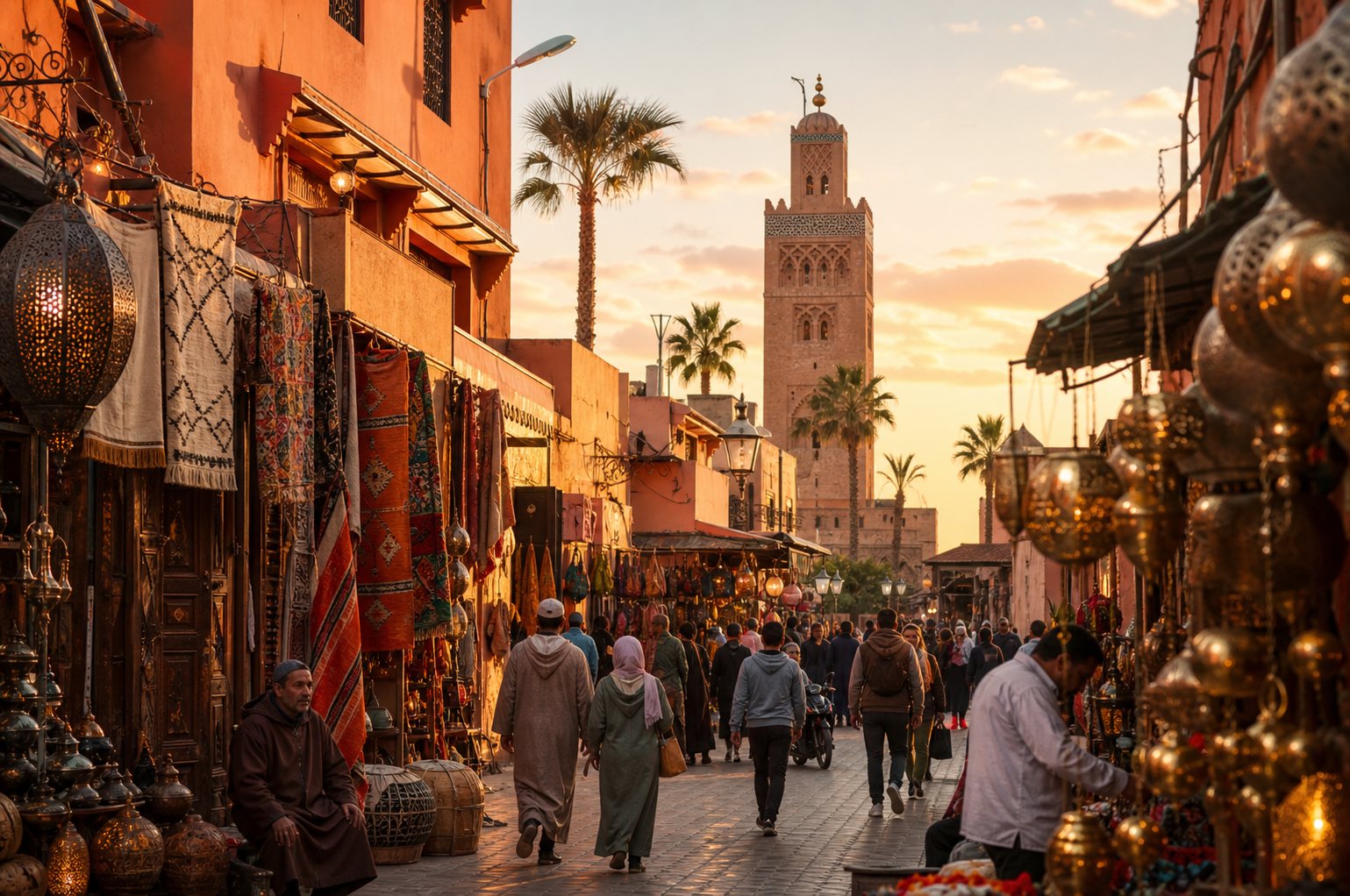
Morocco is a genuinely safe and welcoming country, and the overwhelming majority of people you meet are warm and honest. But like any major tourist destination, the busy medinas have a handful of well-worn hustles aimed at visitors. None of them are dangerous — they are nuisances, not threats — and a little familiarity plus a polite, confident 'no' is all it takes to sidestep them and enjoy the country relaxed.
In this guide
First, the reassurance
It is worth saying clearly: violent crime against tourists is rare in Morocco, and most travellers come home having experienced nothing worse than persistent salesmanship. The hassles below cluster in the busiest tourist medinas — Marrakech and Fes above all — and fall away almost entirely in smaller towns, the mountains, the desert and among the many Moroccans who simply want to chat. Treat this as a guide to a few specific routines, not a portrait of the country.
The right posture is calm confidence, not suspicion. Walking around braced for a scam will sour a trip and insult the genuine hospitality you'll mostly meet. Learn the half-dozen patterns, handle them with good humour, and otherwise assume goodwill.
The faux guide and the 'closed' route
The most common medina hustle is the unofficial 'guide'. A friendly local notices you looking at a map or hesitating at a junction and tells you the way ahead is closed — 'that street is shut today', 'there's a Berber festival', 'the tannery is this way', 'the square is the other direction'. The aim is to peel you off your route, walk you through the maze, and deliver you to a shop (or a 'cooperative') where they earn commission, then ask for payment for the 'tour'.
Handle it simply: thank them, say you know where you're going, and keep walking with intent. If you genuinely want a guide, hire an official one through your riad or a licensed agency — they carry credentials and are excellent. Note that not everyone who helps wants money; many Moroccans give honest directions freely. The tell is the insistence, the invented obstacle, and the steering toward a shop.
- Beware the specific phrases: 'this way is closed', 'festival today', 'the square is that way'.
- Walk with purpose; looking lost invites the approach. Step into a café to check your map.
- If someone leads you even a short distance, expect a request for payment — agree nothing you don't want.
- Hire official guides through your riad or a licensed agency, not in the street.
Taxis: agree the fare or insist on the meter
Petits taxis (the small city taxis, colour-coded by city) are legally metered, but drivers will often quote a flat tourist price instead, especially from airports, stations and major sights. There is nothing sinister here — just ask for the meter ('compteur, s'il vous plaît') as you get in, or, if the driver refuses, agree the total price before the car moves. Either is fine; what you want to avoid is leaving the price undefined until the end of the ride.
Grands taxis (older, usually cream or shared) run fixed routes and are often shared between passengers — confirm whether you're paying for a seat or the whole car. Ride-hailing apps operate in the big cities and remove the negotiation entirely, which many travellers prefer. Keep small notes, as 'no change' is a common way to round a fare up.
The 'gift', the henna, and the photo
Several hassles work by giving you something and then demanding payment. A 'gift' is pressed into your hand — a sprig of mint, a bracelet, a small trinket — and once you're holding it, money is requested. In Marrakech's Jemaa el-Fnaa, women may grab your hand and begin applying henna uninvited, then ask to be paid (the henna is sometimes the black 'PPD' type that can irritate skin). The fix is to never accept the object and never offer your hand — keep hands to yourself and say 'la, shukran' firmly.
The same logic applies to photographs. Snake charmers, water-sellers (in their colourful costumes), monkey handlers and performers in the square make their living from photos and will ask for payment, sometimes assertively, if you point a camera their way — and the monkeys are a genuine animal-welfare concern best not encouraged. If you want a photo, agree a small fee first; if you don't, simply don't photograph them. Always ask before photographing ordinary people, who may decline.
- Don't accept anything placed in your hand; don't offer your hand for henna.
- Decline performers' photos unless you've agreed a fee — and consider skipping the animal acts.
- Ask permission before photographing people; a smile and a gesture is enough.
Shops, tanneries and 'authentic' products
Hard-sell is normal in the souks and is not in itself a scam — bargaining is the expected mechanism (see the souk and rug guides). The specific traps to know: at the Fes tanneries, someone may hand you a sprig of mint 'for the smell', walk you onto a terrace, then a shop will apply heavy pressure and the 'guide' will want a tip. You can visit tanneries perfectly well on your own; the viewing terraces are attached to leather shops who let you look in hope of a sale.
Be alert to misrepresented goods rather than to danger. 'Pure argan oil' is frequently diluted; 'saffron' is sometimes safflower or dyed corn silk; 'antiques' and 'Berber silver' are often recently made; 'cactus silk' is usually rayon. None of this is unique to Morocco, and plenty of sellers are scrupulous — buy provenance-sensitive items (argan, saffron, rugs, silver) from co-operatives, pharmacies or established shops, judge the product on its own merits, and don't pay antique prices without real evidence of age.
How to decline politely (and when to firm up)
Most hassles end the moment you decline clearly and keep moving. A warm but unmistakable 'la, shukran' (no, thank you), a smile, light eye contact and continued walking resolve the great majority of approaches. Over-explaining, apologising or stopping to argue keeps the conversation alive; brevity ends it. Saying you've 'already seen it' or are 'meeting a friend' deflects without confrontation.
Occasionally you'll meet real persistence. Firm up your tone, stop engaging, and walk into a shop, café or your riad — the approach won't follow. There is no need to be rude, and almost never any need to involve the brigade touristique (the tourist police, who do exist in the main cities). Keep perspective: these are minor frictions in a country that is, by and large, safe, generous and a joy to travel.
Frequently asked
Is Morocco safe for tourists?
Yes. Morocco is generally safe and welcoming, with violent crime against tourists rare. The issues most visitors encounter are nuisances — persistent salesmanship, faux guides, taxi fare quibbles — not dangers. They concentrate in the busy Marrakech and Fes medinas and fade in smaller towns, the mountains and the desert. Travel with calm confidence rather than suspicion.
What is the 'this street is closed' trick?
An unofficial 'guide' tells you the way ahead is shut — or that there's a festival today — to peel you off your route, walk you through the medina to a shop where they earn commission, then ask payment for the 'tour'. Just thank them, say you know your way, and keep walking. Genuine official guides are hired through your riad or a licensed agency, never recruited in the street.
Should I use the taxi meter in Morocco?
For petits taxis, yes — ask for the meter ('compteur') as you get in. If the driver won't use it (common from airports and stations), agree the total price before the car moves. Grands taxis run fixed shared routes, so confirm whether you're paying for a seat or the whole car. Ride-hailing apps in the big cities remove the negotiation entirely.
Why did someone give me a 'free' gift or henna and then ask for money?
It's a common medina routine: a trinket is placed in your hand or henna applied to it uninvited, then payment is demanded. Don't accept objects pressed on you and don't offer your hand. A firm, friendly 'la, shukran' and keeping your hands to yourself avoids it. The same applies to photos of performers, who make their living from the camera and will expect a fee.
How do I politely say no to persistent sellers?
A warm but clear 'la, shukran' (no, thank you), a smile and continued walking ends most approaches. Don't over-explain or stop to argue — brevity is what closes the conversation. For real persistence, firm up your tone, stop engaging and step into a shop, café or your riad. There's rarely any need to be rude or to involve the tourist police.
Planning a trip?
Let a Marrakech atelier handle the details.
Tell us your dates and style and we'll send a written itinerary and a transparent quote within 24 hours.
Request an itineraryKeep reading
Planning
Is Morocco Safe to Visit?
Yes — Morocco is one of the safest and most welcoming countries in North Africa for travellers, with a well-established tourism industry. The main day-to-day issues are petty scams and medina hustle, both easily managed.
Culture
Morocco Etiquette & Customs
A little cultural awareness goes a long way in Morocco. Dress modestly, greet warmly, ask before photographing people, use your right hand, and embrace the unhurried pace of mint tea and conversation.
Culture
Shopping in the Souks: What to Buy, Fair Prices & Tips
Morocco's souks are among the world's great shopping experiences — but they reward preparation. Knowing what to look for in rugs, leather, ceramics, lanterns and argan products, what fair prices look like, and how to bargain and ship makes the difference between a satisfying haul and buyer's regret.
Practical
Getting Around Morocco
Morocco has good trains between the main northern cities, comfortable intercity buses, and — for the south, the mountains and the desert — private drivers. The right mix depends on your route and pace.