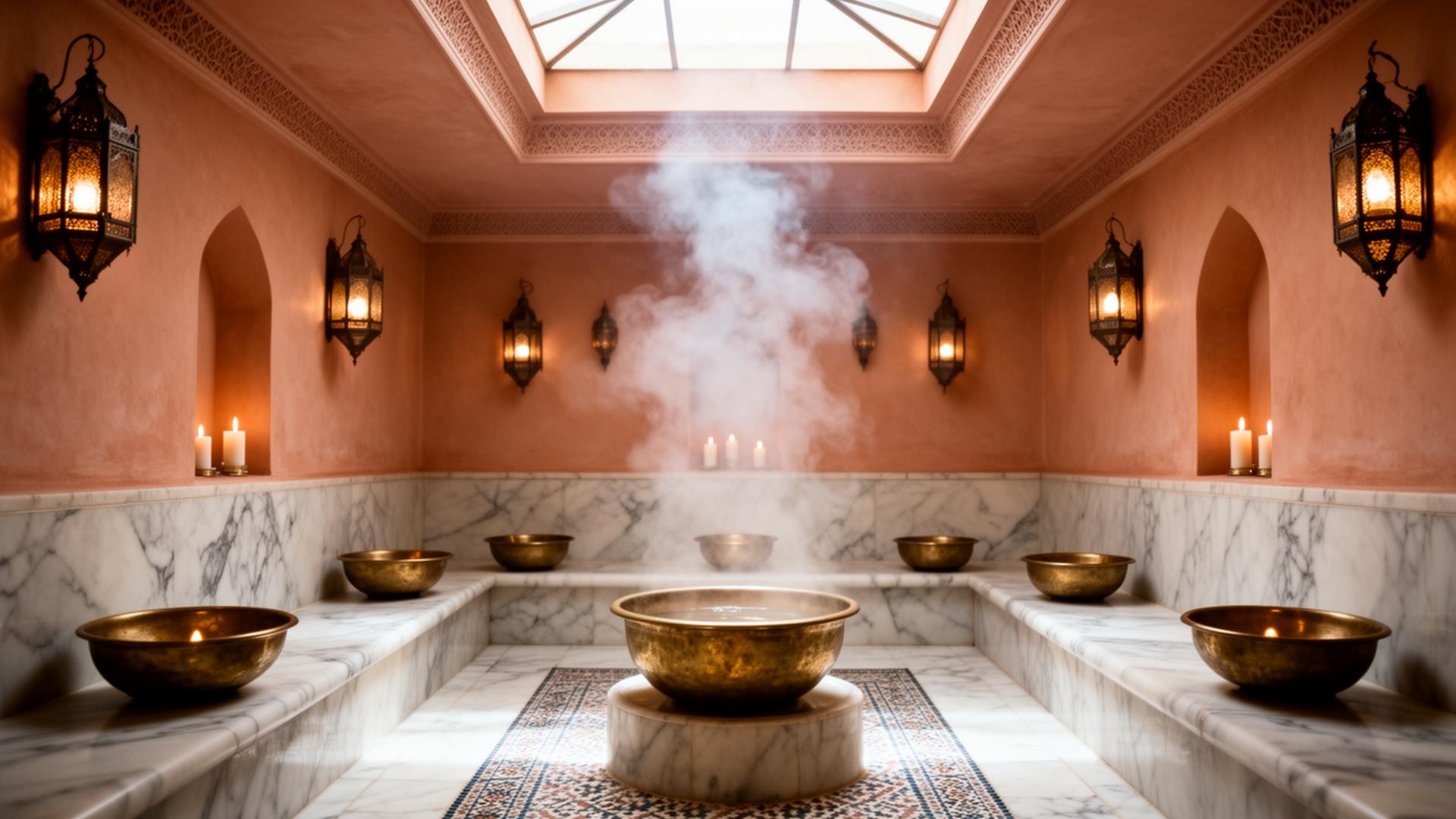
Morocco has quietly become one of the most rewarding places to combine travel with a yoga or wellness retreat — surf-and-yoga on the Atlantic at Taghazout, eco-lodges and digital detoxes in the High Atlas, spa-riad escapes in Marrakech, breezy yoga-and-watersports on the Essaouira coast, and meditation under desert skies near the Sahara and Agafay. This honest guide maps the main hubs, explains what each kind of retreat actually offers, advises when to go to dodge the inland summer heat, and shows how to fold a few restorative days into a wider Morocco trip — alongside the country's own wellness traditions of the hammam, argan oil and Atlantic thalassotherapy.
In this guide
- 01Why Morocco works for a wellness retreat
- 02Taghazout & Tamraght: the surf-and-yoga coast
- 03The High Atlas: mountain retreats & digital detox
- 04Marrakech: spa-riads, rooftop yoga & palmeraie escapes
- 05Essaouira: windy coast, yoga & watersports
- 06The Sahara & Agafay: yoga under desert skies
- 07Morocco's own wellness traditions
- 08Choosing a retreat & tying it into a wider trip
- 09Frequently asked
Why Morocco works for a wellness retreat
Morocco brings together a lot of what a good retreat needs in one short-haul, visa-light destination: warm sun for much of the year, dramatic and varied landscapes within a few hours' drive of each other, a deep-rooted bathing-and-bodycare culture, and accommodation — from beach guesthouses to mountain eco-lodges and walled riads — that lends itself naturally to slow, restorative stays. It is close to Europe yet feels a world away, which is much of the appeal.
Just as importantly, wellness is not an import here. The hammam steam-and-scrub ritual, argan oil pressed in the southwest, mint tea, and a slower rhythm of life are all already part of the culture, so a retreat can feel grounded in the place rather than bolted on. The scene has grown a lot over the past decade, especially around the surf coast and Marrakech, but it remains varied in style and quality — so it pays to understand the different hubs before you book.
- Short-haul from Europe with reliable sun much of the year.
- Coast, mountains and desert all within a few hours of each other.
- Wellness traditions — hammam, argan oil, slow living — are native, not imported.
- Styles range widely: choose the hub that matches the experience you want.
Taghazout & Tamraght: the surf-and-yoga coast
The stretch of Atlantic coast just north of Agadir — the village of Taghazout and neighbouring Tamraght and Aourir — is the heartland of Morocco's surf-and-yoga scene, and for many people it is the first thing that comes to mind. Once a sleepy fishing village, Taghazout has become a relaxed, low-rise hub built around consistent waves, sunshine and a young, international, barefoot-and-laid-back crowd. The classic format here is the combined surf-and-yoga week: morning or evening yoga sessions bookended around surf lessons, with sociable guesthouse meals in between.
It suits people who want their wellness active and outdoorsy rather than purely contemplative, and it is welcoming to beginners — at both surfing and yoga. Because the coast is breezy and tempered by the ocean, it stays comfortable even in summer when inland Morocco bakes, making it close to a year-round option (autumn and spring bring the best mix of warm water, sun and waves). The flip side of its popularity is that the village has developed quickly and can feel busy in peak weeks, so it is worth choosing your accommodation for the vibe you actually want.
- Best for: combining surfing with yoga in a relaxed, social beach-village setting.
- Beginner-friendly for both surf and yoga; lots of week-long combined packages.
- Ocean-tempered climate — comfortable even in summer, great in spring and autumn.
- Popular and fast-growing: pick your guesthouse carefully for the atmosphere you want.
The High Atlas: mountain retreats & digital detox
For something quieter and more inward, the High Atlas mountains south of Marrakech offer a completely different kind of retreat. Around the valleys of Imlil (the gateway to Jebel Toubkal) and Ouirgane, eco-lodges and mountain guesthouses sit among Berber villages, walnut groves and terraced fields, with big silence and even bigger views. Here the emphasis tends to be on yoga paired with hiking, fresh air, simple wholesome food and genuine disconnection — patchy mobile signal makes the mountains a natural fit for a digital detox.
This is the choice for people who find restoration in nature and movement rather than the beach or the spa. Days often blend gentle yoga with guided walks to waterfalls, viewpoints or higher passes, and evenings are about early nights and clear stars. Altitude and terrain mean the mountains are most comfortable from spring through autumn; winter brings cold and snow on the high ground, though lower lodges can still be a cosy off-season escape. A mountain retreat also pairs beautifully with a few days of proper trekking either side.
- Best for: yoga combined with hiking, fresh air and a true digital detox.
- Centred on the Imlil and Ouirgane valleys among Berber villages.
- Spring to autumn is most comfortable; winter is cold with snow up high.
- Pairs naturally with a few days of Atlas trekking.
Marrakech: spa-riads, rooftop yoga & palmeraie escapes
Marrakech is where wellness meets the comfort and design of the city. Within the medina, riads with rooftop terraces and courtyard pools host yoga sessions and pair them with the city's strong spa-and-hammam culture, while out in the Palmeraie — the palm-grove belt on the city's edge — and the surrounding countryside, garden retreats and boutique properties offer a calmer, greener base just a short drive from the action. This is the polished, indulgent end of the spectrum: think morning yoga followed by a hammam scrub, an argan-oil massage and lunch in a garden.
It suits travellers who want to weave wellness into a richer trip rather than retreat from the world entirely — you can do yoga and spa days while still exploring souks, palaces and gardens. The trade-off is the climate: Marrakech is genuinely hot from late spring through summer, regularly pushing past 40°C, so for an inland city stay the shoulder seasons and winter are far more comfortable. Marrakech is also the most common arrival point and trip hub, which makes it easy to add a wellness day or two without changing your plans much.
- Best for: spa-and-yoga indulgence combined with sightseeing and comfort.
- Riad rooftops and courtyards in the medina; greener garden retreats in the Palmeraie.
- Strong hammam and spa culture to pair with yoga.
- Avoid peak summer heat — autumn, winter and spring are far more pleasant inland.
Essaouira: windy coast, yoga & watersports
Up the Atlantic coast, the walled town of Essaouira offers a more bohemian, artsy alternative to Taghazout — a working fishing port and former hippie haunt with a relaxed creative energy, ramparts, music and a long sandy beach. The famous Essaouira wind, which gives it a milder summer than inland, also makes it a magnet for kitesurfing and windsurfing, so the coastal-wellness format here often blends yoga with watersports rather than pure surf.
It is a good fit for people who want a wellness base with character and culture close at hand — galleries, the medina, fresh seafood — alongside the beach and the breeze. The same wind that keeps it cool can make Essaouira genuinely blustery, which is wonderful for watersports and bracing walks but worth knowing if you picture lazing on a still beach; the calmer late summer and early autumn often bring the most settled weather.
- Best for: yoga with a creative, cultured coastal-town base and watersports.
- Reliable wind makes it a kitesurf and windsurf hub — and keeps summers mild.
- More bohemian and walkable than Taghazout, with medina, art and seafood.
- Can be genuinely windy; late summer and early autumn are often the calmest.
The Sahara & Agafay: yoga under desert skies
At the most atmospheric end, a handful of retreats and luxury camps make use of Morocco's desert spaces for yoga and meditation framed by silence, vast horizons and extraordinary night skies. The true Sahara around Merzouga and the Erg Chigaga dunes is the dramatic version — golden erg, camel treks and star-filled nights — while the rocky Agafay 'desert' just outside Marrakech offers a far more accessible stand-in, close enough for an overnight or a short escape from the city.
These tend to be shorter, special-occasion additions rather than week-long retreats in their own right — a couple of nights of sunrise and sunset sessions, stargazing and stillness that pair powerfully with the rest of a trip. Timing matters most here: the desert is brutally hot in high summer and many camps wind down, so roughly October to April is the comfortable window, with cold nights to pack for even when days are warm. Agafay, being closer and at lower stakes, is easier to slot in at most times of year with the same seasonal caveats about midsummer heat.
- Best for: a short, atmospheric meditation-and-yoga add-on, not a full week.
- True Sahara (Merzouga, Erg Chigaga) for drama; Agafay for easy access from Marrakech.
- Roughly October–April is the comfortable season; high summer is too hot.
- Desert nights are cold year-round — pack warm layers.
Morocco's own wellness traditions
Beyond imported yoga, Morocco has its own deep-rooted wellness culture, and the best retreats lean into it. The hammam — a steam-and-scrub ritual using black soap, the kessa exfoliating glove and rhassoul clay — is the cornerstone, available everywhere from simple neighbourhood baths to plush private spa hammams; our dedicated hammam guide explains the ritual and etiquette in full. Argan oil, pressed from the nuts of trees that grow almost only in southwestern Morocco, is the other signature, used both in cooking and in massage and skincare.
On the Atlantic coast, particularly around Agadir, you'll also find thalassotherapy — seawater-based spa treatments — at dedicated wellness hotels, drawing on the mineral-rich ocean. Folding a hammam, an argan-oil massage or a thalasso session into your trip is one of the most authentic forms of wellness Morocco offers, and it requires no retreat booking at all — many riads and spas offer treatments à la carte.
- The hammam: black soap, the kessa glove scrub and rhassoul clay — the cultural cornerstone.
- Argan oil from the southwest, used in massage and skincare as well as cooking.
- Thalassotherapy (seawater treatments) at wellness hotels, especially around Agadir.
- These can be enjoyed à la carte — no full retreat booking needed.
Choosing a retreat & tying it into a wider trip
Start by being honest about the experience you want, because the hubs are genuinely different: active and social by the surf at Taghazout; quiet, natural and disconnected in the High Atlas; polished and indulgent in Marrakech; cultured and breezy in Essaouira; atmospheric and brief in the desert. Match the style — and your tolerance for heat, wind or altitude — to the right place and season, rather than assuming all retreats feel alike.
Because the hubs cluster geographically, a retreat slots neatly into a wider itinerary. The surf coast, Essaouira and Agadir form a natural Atlantic leg; the High Atlas and Agafay sit on Marrakech's doorstep; and a desert add-on rounds off a southern loop. A common and satisfying shape is to bookend an active or sightseeing trip with restorative days — for instance a few nights of mountain or surf yoga to decompress before or after the busier medinas and the Sahara. As with anywhere, look closely at what a given retreat actually includes, the experience of the instructors, and recent independent guest reviews before booking, since the scene's quality varies; we deliberately don't endorse specific operators or quote prices, both of which change.
- Pick the hub by the experience you want, not by assuming all retreats are similar.
- Atlantic leg: Taghazout, Essaouira, Agadir. Marrakech's doorstep: High Atlas, Agafay.
- A popular shape: restorative yoga days bookending busier sightseeing and the desert.
- Check inclusions, instructors and recent independent reviews — quality varies.
Frequently asked
Where is the best place for a yoga retreat in Morocco?
It depends on the style you want. For surf-and-yoga in a relaxed beach village, Taghazout and Tamraght on the Atlantic coast are the main hub. For quiet, nature-based retreats with hiking and a digital detox, head to the High Atlas around Imlil and Ouirgane. For spa-and-yoga indulgence combined with sightseeing, Marrakech and its Palmeraie are ideal. Essaouira offers a cultured, windy coastal base with watersports, and the Sahara or Agafay desert suit short, atmospheric meditation add-ons.
What is the difference between a surf-yoga retreat and a mountain retreat in Morocco?
A surf-yoga retreat — typically on the Taghazout coast — pairs daily yoga with surf lessons in a social, active, beach-village setting, and is welcoming to beginners. A High Atlas mountain retreat is quieter and more contemplative, combining gentle yoga with hiking, fresh air, simple food and genuine disconnection among Berber villages. One is active and outdoorsy by the ocean; the other is restorative and nature-focused in the mountains.
When is the best time of year for a wellness retreat in Morocco?
It varies by location. The Atlantic coast (Taghazout, Essaouira, Agadir) is comfortable nearly year-round thanks to the ocean breeze, with spring and autumn especially good. The High Atlas is best from spring through autumn, as winter brings cold and snow. Inland Marrakech and the desert are punishingly hot in high summer (often past 40°C), so for those, autumn, winter and spring are far more pleasant — the comfortable desert window runs roughly October to April.
Can I do a yoga retreat in the Sahara desert?
Yes — a handful of retreats and luxury camps offer yoga and meditation in the true Sahara around Merzouga and Erg Chigaga, or in the more accessible Agafay 'desert' just outside Marrakech. These tend to be short, special-occasion additions of a night or two — sunrise and sunset sessions, stargazing and stillness — rather than week-long retreats, and they pair well with the rest of a trip. Go roughly October to April and pack warm layers, as desert nights are cold year-round.
What are Morocco's traditional wellness experiences?
The cornerstone is the hammam, a steam-and-scrub ritual using black soap, the kessa exfoliating glove and rhassoul clay, found everywhere from neighbourhood baths to private spa hammams. Argan oil, pressed in southwestern Morocco, is widely used in massage and skincare, and the Atlantic coast around Agadir has thalassotherapy (seawater-based) wellness hotels. You can enjoy a hammam, an argan-oil massage or a thalasso session à la carte without booking a full retreat.
How do I combine a wellness retreat with a wider Morocco trip?
The hubs cluster geographically, so a retreat slots in easily. The surf coast, Essaouira and Agadir form a natural Atlantic leg; the High Atlas and Agafay sit on Marrakech's doorstep; and a desert stay rounds off a southern loop. A popular approach is to bookend a sightseeing or trekking trip with restorative yoga days — a few nights of mountain or surf yoga to decompress before or after the busier medinas and the Sahara.
Planning a trip?
Let a Marrakech atelier handle the details.
Tell us your dates and style and we'll send a written itinerary and a transparent quote within 24 hours.
Request an itineraryKeep reading
Culture
The Moroccan Hammam: A First-Timer's Guide to the Ritual
The hammam is the heart of Moroccan bathing culture — a steam-and-scrub ritual that is part cleansing, part social tradition. This honest guide explains the difference between a public neighbourhood hammam and a private riad or spa hammam, walks you through the ritual step by step (black soap, the kessa glove scrub, rhassoul clay), and covers what to bring, what to wear and the etiquette so a first visit feels comfortable rather than confusing.
Planning
Surfing in Morocco: Taghazout, Agadir & Imsouane
Morocco's Atlantic coast offers consistent surf from September to April, warm winters, cheap living and a relaxed surfing culture centred on Taghazout, with long right-hand points at Imsouane and town beach options in Agadir.
Planning
Trekking the Atlas Mountains: Toubkal, Imlil & Beyond
The High Atlas rises to 4,167 metres at Jbel Toubkal, North Africa's highest peak. Whether you want a single-day walk from Imlil, a multi-day village traverse or a summit attempt, the Atlas rewards it — with the right season, guide and preparation.