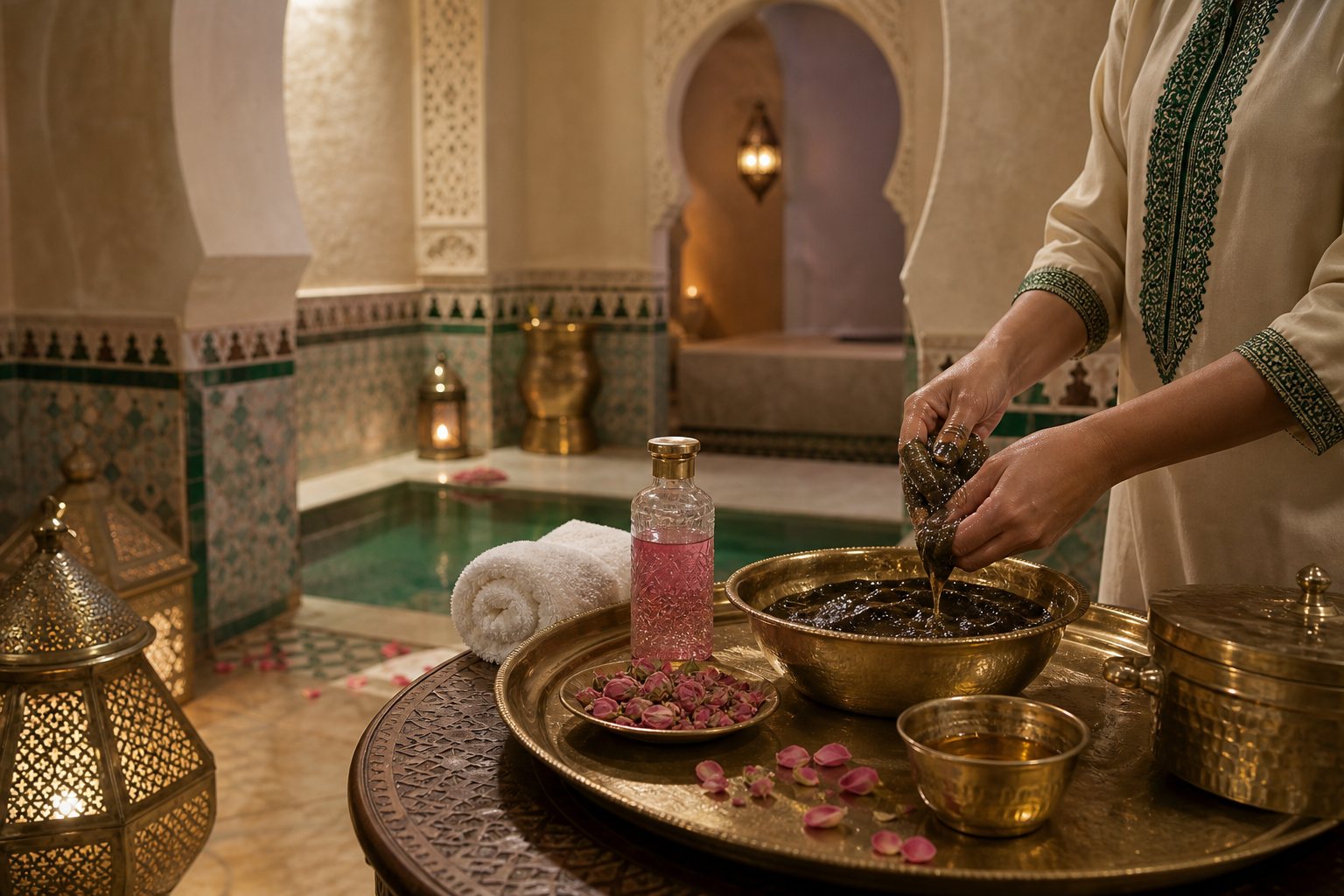
The hammam is the heart of Moroccan bathing culture — a steam-and-scrub ritual that is part cleansing, part social tradition. This honest guide explains the difference between a public neighbourhood hammam and a private riad or spa hammam, walks you through the ritual step by step (black soap, the kessa glove scrub, rhassoul clay), and covers what to bring, what to wear and the etiquette so a first visit feels comfortable rather than confusing.
In this guide
What a hammam actually is
A hammam is a steam bath, and going to one is a deeply rooted part of Moroccan life — historically the place where people thoroughly cleansed, often weekly, and caught up with neighbours. For travellers it is both a genuine cultural experience and a wonderfully restorative one: heat, steam, exfoliation and washing leave your skin remarkably soft and your body relaxed.
There are two broad kinds you'll encounter, and they offer very different experiences. Choosing the right one for your comfort level is the single most useful decision you can make.
- Public neighbourhood hammam — local, basic, communal, very cheap.
- Private riad / spa hammam — booked, guided, comfortable, costs more.
- Both share the same core ritual: steam, scrub, wash.
Public vs private: which to choose
The public neighbourhood hammam is where locals go. It is a plain, tiled, steam-filled set of rooms, separated by gender (or open to each gender at different times of day). You bring your own kit, wash yourself on the floor with buckets of hot and cold water, and can pay a kessala (an attendant) a small extra sum to scrub you. It is communal, unpretentious and immersive — and people are generally modest, wearing underwear rather than going fully nude. It is the authentic, budget option, but it can feel daunting if you don't know the routine.
The private or spa hammam — found in riads, dedicated spas and hotels — packages the same ritual into a calm, guided treatment in a private or semi-private room. An attendant performs each step for you, often finishing with a massage and argan-oil treatment. It is far more expensive than the public version but much gentler for a nervous first-timer, with towels, products and instructions all provided. Many travellers do a spa hammam first, then try a public one once they know the ropes.
- Public: bring your own kit, do it yourself (or pay a kessala), very cheap.
- Private/spa: guided, products supplied, often with massage — pricier.
- First-timers often start with a spa hammam, then go local.
The ritual, step by step
Whichever you choose, the core sequence is the same. First you spend time in the warm, steamy room so the heat opens your pores and softens your skin. Then your body is coated in savon beldi — a dark, soft 'black soap' made from olives — and left for several minutes to do its work.
Next comes the part that defines the experience: the scrub with a kessa, a coarse exfoliating glove. Whether you do it yourself or an attendant does it for you, the kessa lifts away astonishing amounts of dead skin (don't be alarmed — that greyish rolled-off skin is normal and the whole point). After the scrub you rinse, and many treatments then apply rhassoul (ghassoul), a mineral-rich clay from the Atlas, as a cleansing hair-and-body mask before a final rinse. A spa version usually ends with a massage and a rub of argan oil to nourish the freshly scrubbed skin.
- Steam — warm room opens the pores.
- Savon beldi — olive-based black soap, left to soak in.
- Kessa scrub — coarse glove exfoliates away dead skin.
- Rhassoul clay — mineral mask, then a final rinse.
- Finish — argan oil and (in spas) a massage.
What to bring and wear
For a private or spa hammam you generally need to bring nothing — products, towels, robe and slippers are provided. Just turn up, and tie your hair back if it's long. For a public neighbourhood hammam you bring your own kit, which is part of the experience.
On dress: Moroccans do not go fully nude in the hammam. The norm is to keep your underwear (or swimwear) on — most people wear underpants, and that is the safest, most respectful choice for visitors too. Remove jewellery, and be ready for floors that are wet and hot underfoot.
- Public hammam to bring: savon beldi, a kessa glove, a towel, flip-flops, a change of underwear, and a small mat or stool if you have one.
- Buy savon beldi and a kessa cheaply in any souk beforehand.
- Wear underwear or swimwear — full nudity is not the custom.
- Spa/riad hammam: everything is usually provided.
Etiquette and honest expectations
Hammams are strictly gender-separated — either entirely separate facilities or separate times of day for men and women — so you'll be among your own gender throughout. Modesty is respected: keep your underwear on, move calmly, and follow what others do. In a public hammam it is customary to tip the kessala if they scrub you. Drink water afterwards, as the heat is dehydrating, and don't plan anything strenuous straight after — you'll feel pleasantly drained.
Be honest with yourself about the experience. The heat is intense and the scrub is vigorous — not painful, but firmer than a gentle Western spa. A public hammam is basic, communal and not luxurious; its reward is authenticity and a few coins' cost. A spa hammam is comfortable and pampering but more expensive and less 'real'. Either way you emerge with skin softer than you knew it could be, which is exactly why Moroccans have kept the tradition for centuries. Prices vary widely by city and venue, so check before you go rather than assuming.
- Gender-separated, by venue or by time slot.
- Keep underwear on; stay modest and calm.
- Tip the kessala in a public hammam if they scrub you.
- Hydrate afterwards; the scrub is firm but shouldn't hurt.
Frequently asked
What happens in a Moroccan hammam?
You sit in a hot, steamy room to open your pores, are coated in olive-based black soap (savon beldi), then scrubbed all over with a coarse kessa glove that lifts away dead skin. After rinsing, many treatments apply rhassoul clay as a mask before a final rinse, and spa versions finish with a massage and argan oil. The result is deeply clean, very soft skin.
What do you wear in a Moroccan hammam?
You keep your underwear (or swimwear) on — Moroccans do not go fully nude in the hammam, and underpants are the norm and the respectful choice for visitors. Tie back long hair and remove jewellery. In a public hammam you bring your own towel and flip-flops; in a spa or riad hammam, towels and a robe are usually provided.
Should I go to a public hammam or a spa hammam?
A public neighbourhood hammam is authentic, communal and very cheap, but you do most of it yourself and it can feel daunting first time. A spa or riad hammam is more expensive but gentler and fully guided, with products provided and often a massage. Many first-timers choose a spa hammam to learn the ritual, then try a public one later.
Is a hammam scrub painful?
It's vigorous but shouldn't be painful — the kessa glove is coarse and the scrubbing is firm, noticeably more robust than a gentle Western spa, but it's invigorating rather than hurtful. You'll see a surprising amount of dead skin roll off, which is completely normal. Hydrate afterwards, as the heat is dehydrating, and avoid anything strenuous right after.
Planning a trip?
Let a Marrakech atelier handle the details.
Tell us your dates and style and we'll send a written itinerary and a transparent quote within 24 hours.
Request an itineraryKeep reading
Culture
Morocco Etiquette & Customs
A little cultural awareness goes a long way in Morocco. Dress modestly, greet warmly, ask before photographing people, use your right hand, and embrace the unhurried pace of mint tea and conversation.
Planning
Where to Stay in Morocco: Riads, Hotels & Desert Camps
Morocco offers one of the world's great accommodation experiences — from intimate medina riads with plunge pools and private chefs to luxury Sahara tented camps and Atlantic coast boutique hotels. Knowing which type suits your trip, and what to look for in each, makes a significant difference.
Culture
Moroccan Souvenirs: What to Buy & Where
The best souvenirs from Morocco are things made there, by Moroccan hands, that you will actually use at home — not plastic camels. From hand-knotted Berber rugs and Fes leather to argan oil, hand-painted ceramics and thuya wood, here is what to buy and where to find the real thing.