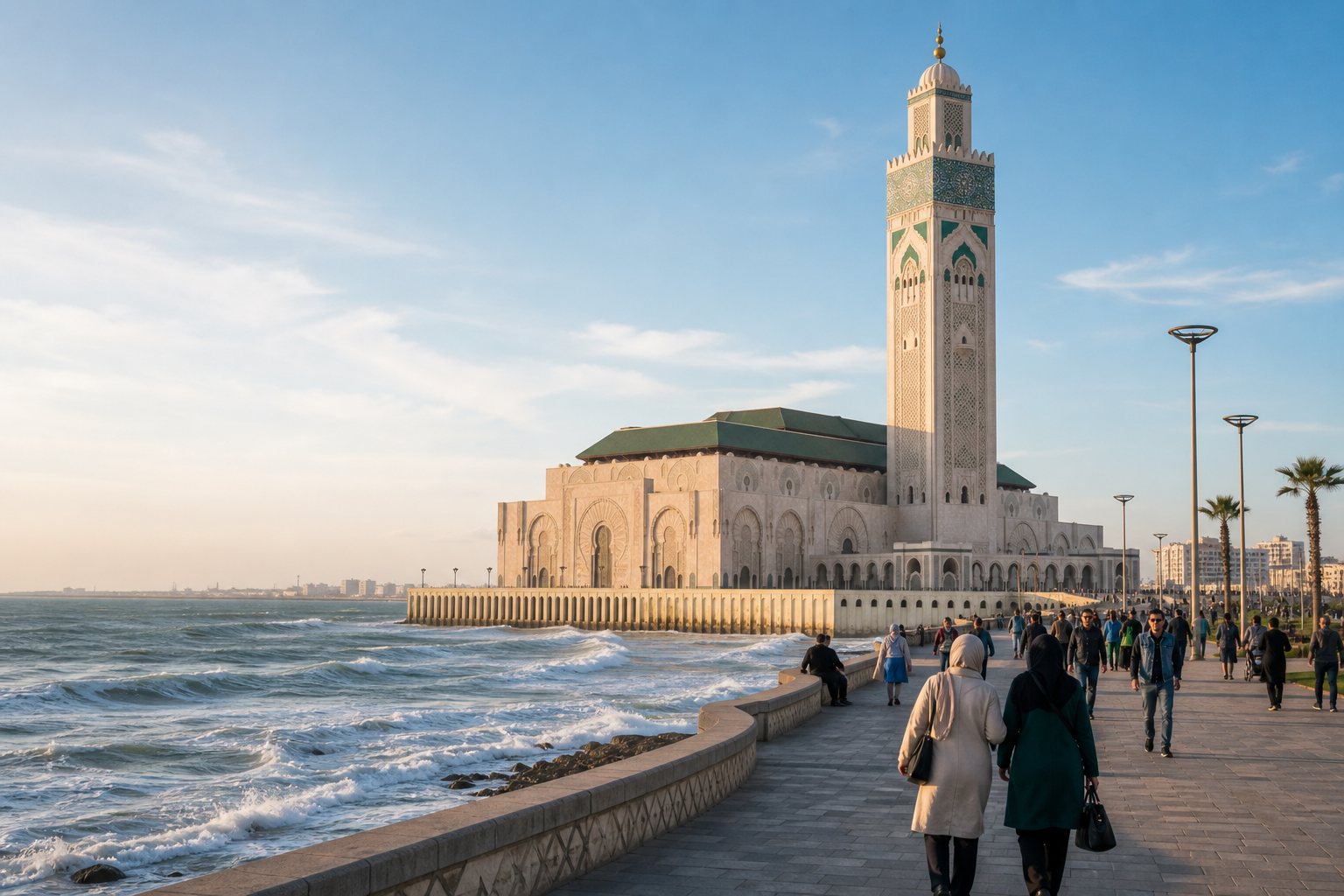
Can you visit mosques in Morocco? Honestly, most working mosques are closed to non-Muslims — but there are notable exceptions you can enter, and the historic madrasas let you see the same breathtaking craftsmanship up close. Here is exactly what is open, what is not, and how to look respectfully.
In this guide
The honest answer: most mosques are closed to non-Muslims
Unlike Turkey or Egypt, Morocco keeps its working mosques reserved for worshippers. With a small number of exceptions, non-Muslims are not permitted inside a functioning mosque — this is a long-standing custom, often traced to the French Protectorate era, and it is observed firmly throughout the country. A guide or a doorway sign will make it clear, and the rule applies regardless of how quiet the mosque looks.
This is not a slight against visitors. It simply means the way you experience Morocco's sacred architecture is different from elsewhere: you admire the great mosques from the outside — their minarets, their monumental gates and courtyards glimpsed through doorways — and you step inside the historic madrasas, where the same artisans' work survives in buildings now preserved as monuments rather than active prayer halls.
- Working mosques: closed to non-Muslims, with the exceptions below.
- Madrasas (Quranic colleges): open to all as historic monuments.
- Zaouias and Sufi shrines: generally Muslim-only.
- Exteriors, minarets and monumental gates: always free to admire.
The exceptions you CAN enter
Two mosques stand out as genuinely accessible to visitors of any faith. The Hassan II Mosque in Casablanca — one of the largest mosques in the world, built out over the Atlantic — admits non-Muslims on guided tours scheduled outside prayer times. The tour takes you into the vast prayer hall beneath its retractable roof and down to the hammam level; tickets and timings are best checked in advance, as the schedule shifts around prayers and Fridays.
In the High Atlas, the historic Tin Mal mosque is a rare second exception: a twelfth-century Almohad mosque, deconsecrated and preserved as a monument, which visitors have long been able to enter. Important caveat — Tin Mal sits in the area hit by the September 2023 earthquake and sustained damage. Access may be restricted, under restoration, or changed, so confirm the current situation locally before making the drive.
- Hassan II Mosque, Casablanca — guided tours, outside prayer times; book ahead.
- Tin Mal Mosque, High Atlas — historic monument; check access after 2023 earthquake damage.
The madrasas: where you see the craftsmanship
If you want to stand inside a masterpiece of Moroccan-Andalusian art, the madrasas are the answer. These former Quranic colleges are open to all as historic monuments, and they concentrate the very best of the craft: carved cedar, sculpted stucco, and walls of zellij mosaic tilework around a serene central courtyard and pool.
In Fes, the Bou Inania and Al-Attarine madrasas are the showpieces — small, jewel-like, and worth lingering in. In Marrakech, the Ben Youssef Madrasa is the grandest of all, with a courtyard that ranks among the most beautiful interiors in the country. Tickets are inexpensive and the buildings are quiet compared with the souks outside.
- Fes: Bou Inania Madrasa and Al-Attarine Madrasa.
- Marrakech: Ben Youssef Madrasa.
- What to look for: zellij tilework, carved stucco, cedar screens, the central courtyard.
Admiring the great mosques from outside
Even where you cannot enter, Morocco's mosques are designed to be seen. The Koutoubia in Marrakech is the city's defining landmark — its twelfth-century minaret set the template for towers from Seville to Rabat, and the surrounding gardens give you a clear, unhurried view. In Fes, you can stand at the great gateway of the Qarawiyyin, one of the oldest universities in the world, and look into the courtyard without crossing the threshold.
Across the medinas, monumental gates and minarets reward a slow walk: the R'cif and Andalusian mosques in Fes, the Hassan Tower in Rabat (an unfinished medieval minaret you can approach freely), and the green-tiled roofs that mark a mosque from the rooftops above. A local guide can point out which courtyard doors you may photograph from the street.
Etiquette and respectful viewing
Whether you are touring the Hassan II Mosque, walking through a madrasa, or simply passing a mosque doorway, a little awareness goes a long way. Dress modestly — shoulders and knees covered for everyone; many visitors carry a scarf. Keep your voice down near prayer areas, and never walk in front of someone who is praying or photograph worshippers without asking.
Morocco's day is shaped by the five daily calls to prayer (the adhan), broadcast from minarets across every town. Friday midday is the main congregational prayer, when mosques are busiest and some streets fill with worshippers. During Ramadan, the rhythm shifts again — sites stay open but the city slows by day and comes alive after sunset. None of this restricts your sightseeing; it simply asks for the same quiet courtesy you would show at any place of worship.
- Dress modestly — cover shoulders and knees; carry a scarf.
- Stay quiet near prayer areas; don't photograph people praying.
- Don't try to enter a working mosque uninvited.
- Expect the five daily calls to prayer; Fridays and Ramadan change the rhythm, not your access.
Frequently asked
Can tourists go inside mosques in Morocco?
Generally no — most working mosques in Morocco are closed to non-Muslims. The main exceptions are the Hassan II Mosque in Casablanca, which runs guided tours for visitors of any faith outside prayer times, and the historic Tin Mal mosque in the High Atlas, a preserved monument (check its access after the 2023 earthquake). To see the same craftsmanship up close, visit the madrasas, which are open to all.
What is the difference between a mosque and a madrasa?
A mosque is an active place of worship and is generally reserved for Muslims in Morocco. A madrasa is a former Quranic college — historic buildings such as Bou Inania and Al-Attarine in Fes, or Ben Youssef in Marrakech — now preserved as monuments and open to all visitors, with stunning zellij tilework, carved stucco and cedar.
Can I visit the Hassan II Mosque in Casablanca?
Yes. The Hassan II Mosque is one of the few mosques in Morocco that admits non-Muslims, via guided tours scheduled outside prayer times. The tour includes the immense prayer hall and the lower hammam level. Check current timings and tickets in advance, as the schedule changes around prayers and Fridays.
Can I take photos of mosques in Morocco?
You can freely photograph mosque exteriors, minarets and monumental gates — the Koutoubia in Marrakech and the Qarawiyyin gateway in Fes are favourites. Inside the Hassan II Mosque and the madrasas, photography is usually fine. Always avoid photographing people while they pray, and ask before photographing worshippers.
Planning a trip?
Let a Marrakech atelier handle the details.
Tell us your dates and style and we'll send a written itinerary and a transparent quote within 24 hours.
Request an itineraryKeep reading
Culture
Morocco Etiquette & Customs
A little cultural awareness goes a long way in Morocco. Dress modestly, greet warmly, ask before photographing people, use your right hand, and embrace the unhurried pace of mint tea and conversation.
Culture
A Guide to Moroccan Architecture & Decorative Arts
Moroccan architecture is a language of courtyards, fortresses and dazzling surface decoration. From the inward-looking riad and the earthen kasbah to zellij tilework, tadelakt plaster and carved cedar, this guide explains the building types and decorative arts you'll see across the medinas, palaces and southern oases.
Culture
Morocco's Four Imperial Cities
Fes, Marrakech, Meknes and Rabat are Morocco's four imperial cities — each a former capital of a ruling dynasty. Together they trace a thousand years of Moroccan power, architecture and craft, and they form the country's classic 'imperial cities' touring circuit.
Culture
Morocco's UNESCO World Heritage Sites
Morocco has nine UNESCO World Heritage Sites, all of them cultural — from the great imperial medinas of Fez and Marrakesh to the earthen ksar of Aït Ben Haddou, the Roman ruins of Volubilis and the Portuguese-built city of El Jadida. This guide describes each and shows how to weave them into a single trip.