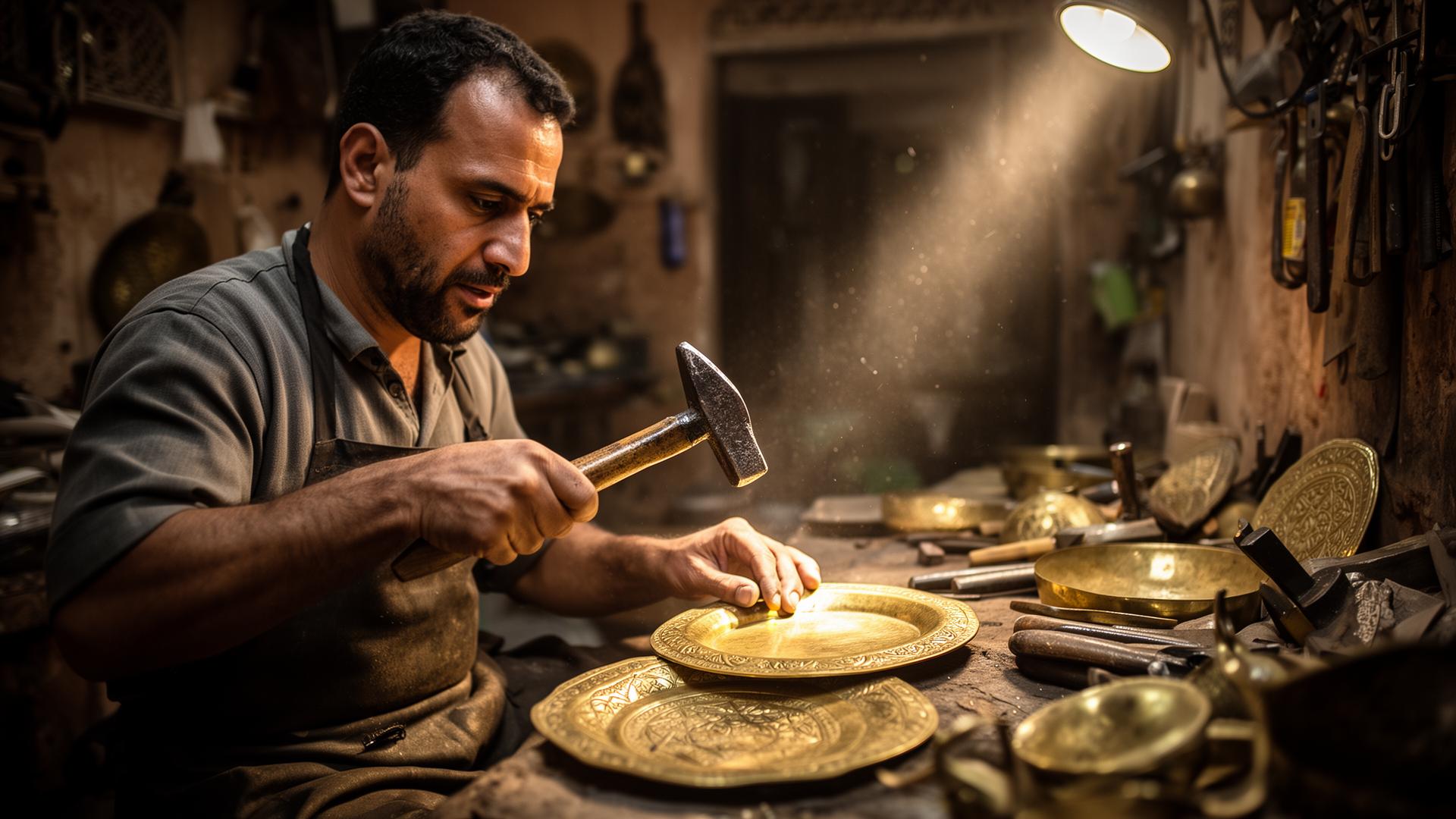
The best souvenirs from Morocco are things made there, by Moroccan hands, that you will actually use at home — not plastic camels. From hand-knotted Berber rugs and Fes leather to argan oil, hand-painted ceramics and thuya wood, here is what to buy and where to find the real thing.
In this guide
What are the most worthwhile souvenirs from Morocco?
Morocco's craft traditions are genuinely ancient and, in many cases, unbroken since the medieval period. The most rewarding souvenirs are those that carry this heritage: a hand-knotted Berber rug woven on a loom in an Atlas village, a pair of babouche slippers tanned in Fes using vegetable dye, a small bowl from a Fassi pottery workshop, or a bottle of cold-pressed argan oil from a Souss Valley women's co-operative.
These things are not only beautiful — they are difficult or impossible to replicate outside Morocco, and the story behind them is part of what you are taking home. The alternative — the tourist souvenir shops near the main attractions selling mass-produced goods that may not even be made in Morocco — offers none of this.
- Hand-knotted Berber rugs (Beni Ourain, Boucherouite, Azilal): the single highest-value purchase; genuinely unique.
- Leather goods from Fes: babouche slippers, bags, poufs — the Chouara tannery's vegetable-tanned leather is world-class.
- Ceramics: blue-on-white Fassi pottery; geometric polychrome Meknes style; terracotta Safi ware.
- Argan oil: culinary (toasted, nutty) and cosmetic (golden, mild) — from a certified women's co-operative only.
- Thuya wood: fragrant marquetry boxes, chess sets and frames from Essaouira's workshops.
- Hand-painted lanterns: brass or copper, hand-pierced; Marrakech souks are the primary source.
- Moroccan spices: ras el hanout (30+ spice blend), saffron from Taliouine, dried rose petals from the Dadès Valley.
Where is the best place to buy souvenirs in Morocco?
Different crafts have their natural homes in different cities. Fes is the world capital of traditional Moroccan leather and fine ceramics — the leather from the Chouara tannery workshops is distinctive in quality, and the pottery quarter (Ain Nokbi) produces Fassi blue-and-white ware at workshop prices. Marrakech has the most accessible and atmospheric souks (Rahba Lakdima for spices and herbs; the souk des tapis for rugs; the lampshade souk for lanterns) but quality varies and tourist-facing prices are high.
Essaouira is the only place to buy genuine thuya wood marquetry — the craft is specific to this city and the workshops behind the Skala de la Ville are the source. For argan oil, the women's co-operatives along the Agadir–Essaouira road are the authentic source; buying directly from a co-op guarantees provenance and ensures the women receive the income rather than middlemen.
- Rugs: Marrakech souk des tapis; Atlas co-operatives in Aït Ben Haddou area; compare quality before buying.
- Leather: Fes tannery-adjacent shops (Chez Rachid and similar) for the best Chouara product.
- Ceramics: Fes pottery quarter (Ain Nokbi) for workshop prices; Meknes souk for the polychrome style.
- Argan oil: Souss Valley women's co-operatives (look for co-op certification signs on the Agadir–Essaouira road).
- Thuya wood: Essaouira only — workshops behind the Skala de la Ville.
- Spices: Rahba Lakdima (Marrakech spice market) for ras el hanout, dried herbs and rose petals.
How do you know if a souvenir is authentic?
The challenge in Moroccan souks is that the same shelf can hold a genuine hand-knotted Berber rug and a machine-woven copy, a real argan oil and an adulterated one, a thuya wood box from Essaouira and a factory-made imitation. Distinguishing them requires a few practical checks.
For rugs, examine the reverse: hand-knotted rugs have visible individual knots (irregular, tight); machine-made rugs have a smooth, fabric-like backing. Natural wool has a slight springiness and warmth; synthetic fibres are cooler and slightly plasticky. For argan oil, genuine cold-pressed cosmetic argan oil is golden-amber with a mild, slightly nutty scent and a fluid texture; adulterated products are often much cheaper, lighter in colour, and may smell faintly synthetic. For ceramics, look for hand-painted rather than transfer-printed decoration — slight irregularities in the brush strokes indicate the real thing.
What makes a good souvenir gift from Morocco?
For gifts, the most transportable and universally appreciated Moroccan items are spices and food products (ras el hanout, argan oil, honey, preserved lemons, rose water), small ceramics (a hand-painted tea glass or a spice bowl), babouche slippers (lightweight and available in many sizes), and moroccan tea glasses with their ornate silver-coloured holders. These fit in a standard bag, are genuinely Moroccan, and arrive home intact.
A hand-pierced brass lantern makes a wonderful gift but requires careful packing (wrap it in clothing). A small Berber rug — the boucherouite style, woven from recycled fabric in bright colours — is compact enough to carry as cabin luggage if rolled tightly. Avoid any product made from tortoiseshell, ivory, or protected animal materials — customs seizure is a real risk and the purchase is ethically indefensible.
- Best to carry: spices, argan oil, tea glasses, babouche slippers — all light and TSA-friendly.
- Best to ship: rugs, large lanterns, ceramic sets — most rug shops offer international shipping.
- Avoid: tortoiseshell, ivory, protected animal products — illegal to import in most countries.
- Argan oil in carry-on: quantities over 100 ml will be confiscated at airport security; pack in hold luggage or ship.
What should you pay for souvenirs in Morocco?
Opening prices in tourist souks are typically 200–400% of a fair price, and bargaining is expected. A rough starting point: open your counter-offer at 30–40% of the asking price and settle around 50–60% of the original figure for most goods. Fixed-price shops (they advertise 'prix fixe') are the exception — the marked price is genuine, and quality in these shops is often more reliably checked than in the open souk. Women's argan co-operatives operate on fixed prices, which are transparent and fair.
Walking away slowly and genuinely is the single most effective bargaining technique. A meaningful proportion of Moroccan souk sales close when the buyer walks out and the merchant calls them back. Return after 20 minutes if you genuinely want the item — the price will frequently have moved.
Frequently asked
What is the most popular souvenir from Morocco?
Argan oil, babouche slippers and hand-painted ceramic tagines are among the most frequently purchased items. Berber rugs are the most significant investment souvenir that many visitors make; spices and food products are the most accessible and universally appreciated gifts.
Where is the best place to buy a Moroccan rug?
Marrakech's souk des tapis (carpet souk) has the widest selection, though prices are tourist-facing and quality varies. Fes's medina has good Atlas rugs at slightly better prices. For the most authentic Berber village rugs — Beni Ourain, Azilal — seek out co-operatives in the Atlas foothills or small shops in Aït Ben Haddou village. Always examine the reverse to verify hand-knotting.
Is argan oil expensive in Morocco?
At a certified women's co-operative in the Souss Valley, genuine cold-pressed cosmetic argan oil costs approximately 80–120 MAD per 100 ml (US$8–12). Tourist souk prices for inferior or adulterated products can reach 200–500 MAD for the same volume. Buying directly from a co-operative guarantees authenticity and ensures the income supports the women who produce it.
Can you bring Moroccan souvenirs through customs?
Standard craft items — ceramics, leather, textiles, argan oil, spices — are freely importable in most countries. Argan oil over 100 ml must travel in your hold luggage rather than carry-on. Antiques over 100 years old require export documentation from the Moroccan government; any vendor claiming to sell genuine antiques should be able to provide this paperwork.
What is ras el hanout and where should I buy it?
Ras el hanout is Morocco's signature spice blend — the name means 'head of the shop' and the recipe varies by merchant but typically includes 20–35 spices: cumin, coriander, ginger, cinnamon, cardamom, rose petals, mace and more. Buy it loose by weight in the Rahba Lakdima spice market in Marrakech or from a reputable herbalist, rather than in pre-packaged tourist-facing jars. Ask what is in it; a good merchant will list the components.
Planning a trip?
Let a Marrakech atelier handle the details.
Tell us your dates and style and we'll send a written itinerary and a transparent quote within 24 hours.
Request an itineraryKeep reading
Culture
Shopping in the Souks: What to Buy, Fair Prices & Tips
Morocco's souks are among the world's great shopping experiences — but they reward preparation. Knowing what to look for in rugs, leather, ceramics, lanterns and argan products, what fair prices look like, and how to bargain and ship makes the difference between a satisfying haul and buyer's regret.
Culture
Morocco Etiquette & Customs
A little cultural awareness goes a long way in Morocco. Dress modestly, greet warmly, ask before photographing people, use your right hand, and embrace the unhurried pace of mint tea and conversation.
Planning
Things to Do in Marrakech: The Essential Guide
Marrakech is sensory overload in the best possible way — a medieval medina, world-class gardens, hammam rituals, rooftop dinners and a square that transforms nightly into one of the world's great open-air spectacles. Here is where to spend your time.