Tap water in Morocco is treated and technically meets national standards in the major cities, but travellers — particularly on short visits — are strongly advised to drink bottled or filtered water. Stomach upsets from the change in local bacteria are common even when the water is not technically contaminated.
In this guide
Is the tap water in Moroccan cities safe to drink?
The Office National de l'Eau Potable (ONEP) oversees water treatment across Morocco, and water in the major cities — Marrakech, Casablanca, Fes, Rabat, Agadir — is chlorinated and treated to national standards. Locals drink it; Moroccans who have grown up with the water have the gut flora to process it without issue.
For international visitors, the picture is different. Even water that meets technical safety standards can cause gastrointestinal upset in travellers whose digestive systems are unaccustomed to the local microbial profile. This is not unique to Morocco — it is the same reason travellers sometimes feel unwell in other countries without any actual contamination present. On a short trip of one to three weeks, sticking to bottled or filtered water is the most reliable way to avoid losing two days of your itinerary to stomach problems.
What about rural areas, the Atlas and the Sahara?
Outside the main cities, water infrastructure is less consistent. In small Atlas villages and rural guesthouses (gîtes), water may come from springs or local sources that are not treated at all, or may pass through aged pipes that introduce contamination. In the Sahara, camp water is typically sourced from deep wells or brought in by vehicle — it is safe for normal use but not always ideal for drinking without treatment.
Carrying a portable water filter or purification tablets is advisable for multi-day Atlas treks or extended desert stays. In practice, the guesthouses (gîtes) that line the Toubkal trekking routes all sell or provide bottled water, but availability becomes less reliable in the more remote valley routes.
- High Atlas villages: use bottled water for drinking; the tap water may be fine, but the risk is not worth it on a short visit.
- Desert camps: camp water is generally safe for washing; drink the bottled water the camp provides.
- Springs in the mountains: visually clear mountain spring water may carry giardia or other pathogens — do not drink untreated without a filter.
- Ice: made from tap water and therefore carries the same caveats; in tourist restaurants, ice in drinks is generally fine.
Should you use tap water for brushing teeth?
This is a matter of individual risk tolerance. In the major city riads, many experienced travellers brush their teeth with tap water without issue. The general consensus among those who travel Morocco frequently is that in Marrakech and Casablanca, tap water for tooth-brushing is usually fine; in rural guesthouses and the desert, use bottled water.
If you are prone to stomach sensitivity, brushing with bottled water throughout the trip is a simple precaution that costs very little — bottled water is cheap and widely available everywhere in Morocco (typically 4–8 MAD for a 1.5-litre bottle).
What are the alternatives to single-use plastic bottles?
Single-use plastic bottle waste is a significant environmental problem in Morocco, particularly in cities and along hiking routes. Bringing a reusable bottle and filling it with filtered water where available is more sustainable. Some higher-end riads and hotels provide filtered water dispensers or offer filtered water on request.
Portable filtration options — a LifeStraw bottle, a Sawyer Squeeze filter or similar — allow you to drink from any source with confidence, which is particularly useful on Atlas treks where carrying multiple litres of bottled water through mountain terrain is impractical. Purification tablets (iodine or chlorine dioxide) are a lighter backup option.
What to do if you get stomach problems in Morocco
Traveller's diarrhoea — whatever the exact cause — is best managed by staying well hydrated with clean water and electrolyte sachets (oral rehydration salts, available from any Moroccan pharmacy). Most cases resolve within 24–48 hours without medication. If symptoms are severe, include blood, or persist beyond 48 hours, seek medical attention — private clinics in the major cities are well-equipped to treat travel illness. Carrying a course of azithromycin or ciprofloxacin prescribed by your doctor before travel is standard practice for travellers to North Africa and the Middle East.
Frequently asked
Can you drink the tap water in Marrakech?
The tap water in Marrakech is treated and technically safe by national standards. Most travellers on short visits stick to bottled water to avoid stomach upsets from the change in local bacteria — not because the water is contaminated, but because any unfamiliar water source can cause temporary digestive upset. Bottled water is widely available and inexpensive.
Is it safe to eat salads and raw vegetables in Morocco?
In good tourist restaurants and riads, salads are generally fine — they are typically washed in treated water and prepared with reasonable hygiene. In very budget establishments or street stalls, raw vegetables washed in uncertain water carry a slightly higher risk. Cooked food is the safest option, particularly for travellers with sensitive stomachs.
What should I drink in Morocco if not tap water?
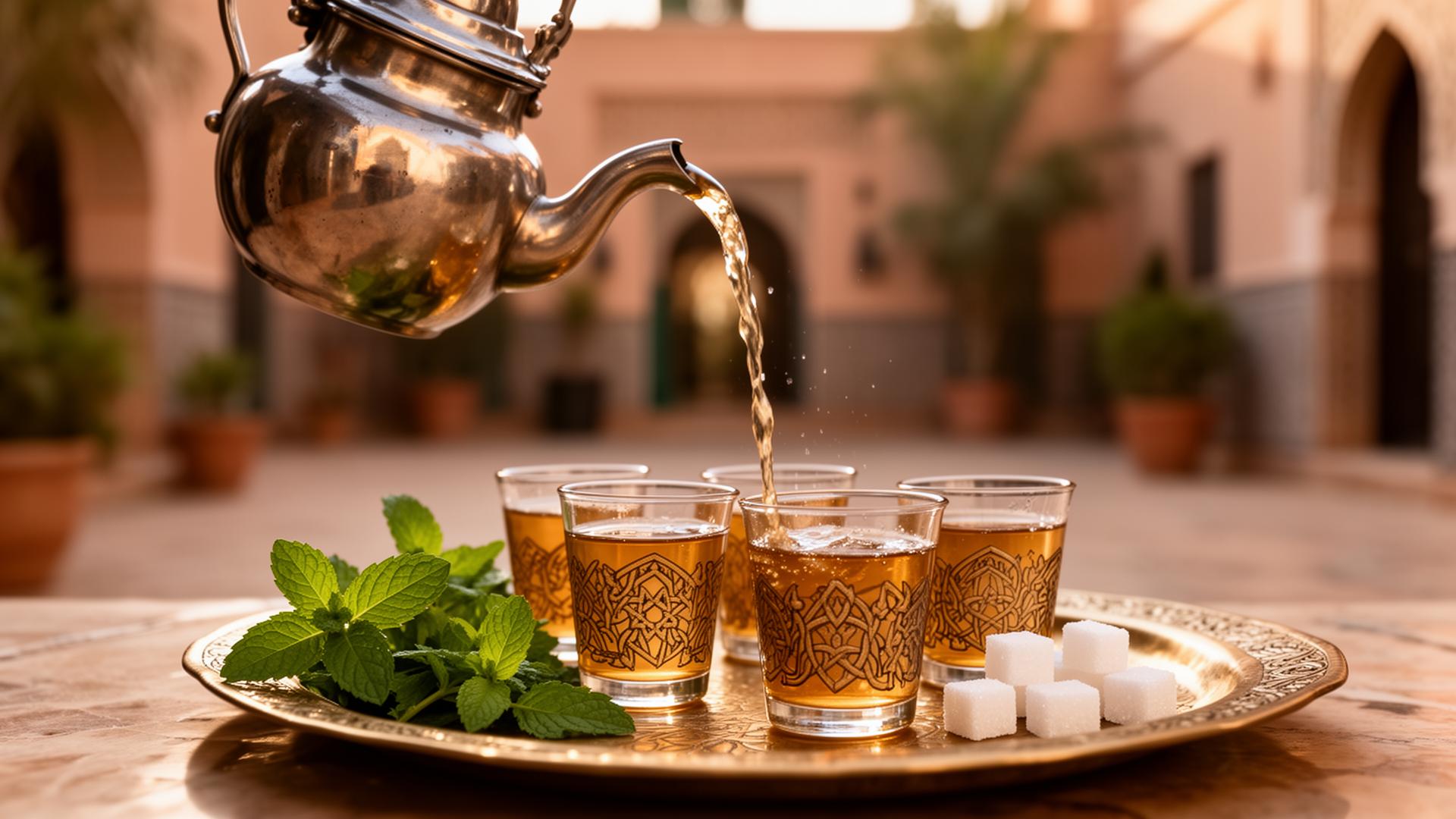
Bottled mineral water (brands including Sidi Ali, Aïn Saïss and Oulmès are widely sold) is the standard choice. Mint tea — made with boiling water — is completely safe. Fresh-squeezed orange juice from reputable stalls (the Jemaa el-Fnaa stalls in Marrakech are a classic) is generally fine. Avoid ice in drinks at very basic establishments.
Is bottled water expensive in Morocco?
No — a 1.5-litre bottle of mineral water costs approximately 4–8 MAD (under US$1) from a supermarket or convenience shop. Restaurants and riads charge more (10–25 MAD), but the cost is still modest by European or American standards.
Should I bring water purification tablets for Morocco?
Not essential for a standard city-based trip, but worthwhile for Atlas trekking or extended desert stays where bottled water access is less reliable. Purification tablets or a portable filter are light and cheap, and provide a useful backup if you need to use a spring or well source.
Planning a trip?
Let a Marrakech atelier handle the details.
Tell us your dates and style and we'll send a written itinerary and a transparent quote within 24 hours.
Request an itineraryKeep reading
Planning
Is Morocco Safe to Visit?
Yes — Morocco is one of the safest and most welcoming countries in North Africa for travellers, with a well-established tourism industry. The main day-to-day issues are petty scams and medina hustle, both easily managed.
Practical
What to Pack for Morocco
Pack light, modest and layered. Morocco swings from hot medinas to cold desert and Atlas nights in a single trip, so breathable layers, comfortable walking shoes and a warm top cover almost everything.
Practical
Morocco Travel Checklist: Everything to Do Before You Go
A complete pre-departure checklist for Morocco: documents, bookings, money, health, connectivity and packing — everything to confirm before you board so nothing is left to chance.