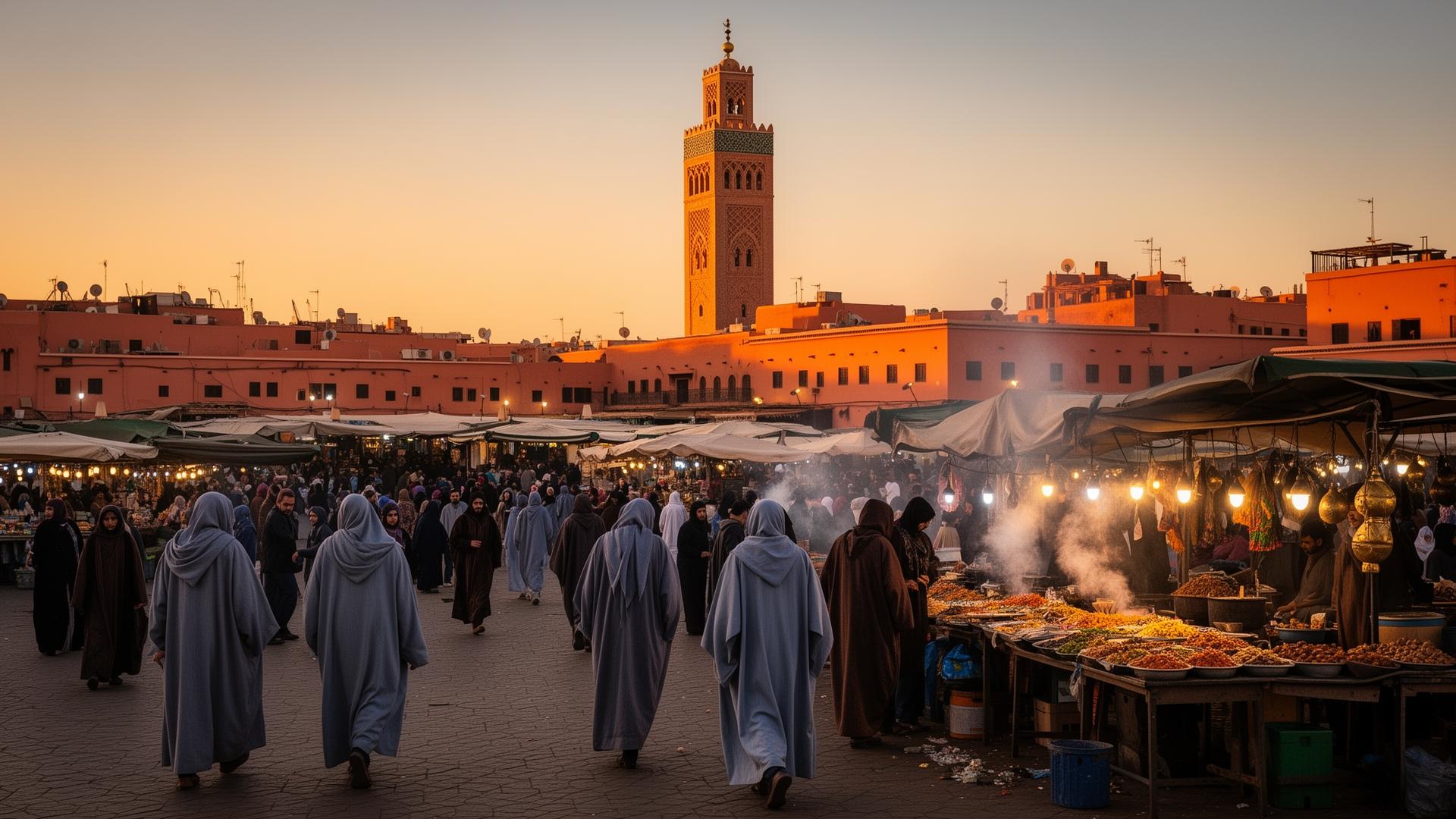
Winter (December–February) is an underrated season for Morocco — the cities and Sahara are at their most comfortable, crowds thin out, and the High Atlas turns dramatically white. Knowing where to go, what to expect and what to pack makes a winter trip one of the most rewarding.
In this guide
Why is winter a good time to visit Morocco?
December through February is low season for most of Morocco, which translates into genuine advantages: lower riad rates (often 20–40% below peak), smaller crowds in the Jemaa el-Fnaa and the tanneries, and a quieter, more local rhythm in the medinas. The cities — Marrakech, Fes, Meknes, Chefchaouen — enjoy mild, sunny days of 15–20°C. The Sahara is at its most beautiful: clear skies, golden dune light and cool nights that make the camp fire essential and the stars extraordinary.
The trade-off is the Atlas: Toubkal and the high passes (Tizi n'Tichka, Tizi n'Test) can close entirely after heavy snow in January, which affects the Marrakech–Ouarzazate overland route. Chefchaouen in the Rif can be genuinely cold and occasionally snowy. The Atlantic coast is mild but can be overcast and rainy, particularly from late November to early January.
- Marrakech in winter: daytime 15–20°C; cold nights (5–10°C); pack a warm layer for evenings.
- Fes in winter: slightly cooler and occasionally rainy; the medina is quietest and most atmospheric.
- Sahara (Merzouga): ideal — daytime 18–25°C, night temperatures can drop to 2–5°C; bring a fleece.
- High Atlas: snow above 2,000 m; Tizi n'Tichka pass can close after snowfall — check conditions.
- Atlantic coast (Essaouira, Agadir): mild (14–20°C) but the windiest and wettest period.
Which parts of Morocco are best in winter?
The Sahara is the winter prize. Erg Chebbi at Merzouga and Erg Chigaga near M'Hamid are at their most spectacular: October to March is the peak season for desert camps, with mild days, cold clear nights and the dune light that summer heat drains of all colour. A luxury camp night in January — fire-lit tent, Milky Way overhead, no other camps audible — is one of the finest experiences Morocco offers at any time of year.
Marrakech and the imperial cities (Fes, Meknes, Rabat) are excellent in winter. Museum queues are short, riads offer attentive service to smaller guest lists, and the afternoon light in the souks has a low, golden quality. The hammam in winter is a necessity rather than a luxury — the best possible antidote to a cold morning's medina walk.
What to pack for Morocco in winter
Winter requires more layering than the packing lists for summer Morocco suggest. The daytime city temperature is pleasant in a light jacket; evenings drop sharply, particularly in Fes and Chefchaouen where 5°C nights are not unusual in January. For the Sahara, a proper warm mid-layer (fleece or down) is non-negotiable — desert nights feel genuinely cold regardless of the daytime warmth.
- Essential: a warm mid-layer (fleece or packable down) for Sahara nights and Atlas visits.
- Footwear: waterproof walking shoes are useful for any Atlas or mountain day.
- Layers: a light base layer, a mid-layer and a windproof outer shell cover most situations.
- Rain layer: useful for the Atlantic coast; not typically needed in Marrakech or the Sahara.
- Sun protection: the Moroccan winter sun is still intense at altitude and on white surfaces — bring SPF.
What events happen in Morocco in winter?
December and January in Morocco's medinas carry the quiet energy of low season — the festivals are sparse, but the intimacy and the access to locals' daily life are greater. The Marrakech International Film Festival typically falls in late November or early December, filling the city's riads and rooftop bars with an international crowd. Yennayer — the Amazigh (Berber) New Year — falls on 13 January and is increasingly celebrated publicly, particularly in Berber-majority towns in the Atlas and the south.
For those whose dates are flexible, January and February can coincide with a powerful Ramadan window in certain years (check the calendar, as dates shift annually). Travelling in Ramadan in winter means shorter fasting days and a particularly electric evening atmosphere around the iftar sunset meal.
Is the Tizi n'Tichka pass open in winter?
The Tizi n'Tichka (2,260 m), the main road connecting Marrakech to Ouarzazate and the Saharan south, is the critical winter logistics question. It can close after heavy snowfall, typically for 6–24 hours until the gendarmerie clears it. Closures are most frequent in January and early February. If your Sahara trip depends on this route, build a flexible day into the plan and ask your driver to check the day before. Alternatively, travel earlier in the season (November or December) when snow is less frequent, or fly Marrakech–Ouarzazate on the domestic Royal Air Maroc service when available.
Frequently asked
Is Morocco worth visiting in winter?
Yes — particularly for the Sahara, the imperial cities and anyone who wants to avoid the peak-season crowds of spring and autumn. The combination of lower prices, quieter sites and ideal desert conditions makes November to February an excellent window for a significant proportion of Morocco's best experiences.
How cold does Morocco get in winter?
City daytime temperatures are mild: 14–20°C in Marrakech, 10–16°C in Fes and Chefchaouen. Nights are cold — 5–10°C in the cities, potentially below freezing in the High Atlas and the Sahara desert. The cold is dry rather than damp, which makes it feel less severe than similar temperatures in Northern Europe.
Is the Sahara cold in winter?
Days are warm and sunny (18–26°C), but desert nights in December–February can drop to 2–5°C. Good luxury camps provide warm blankets and some have heated tents. Pack a proper warm mid-layer and wear it from sunset — the temperature drops rapidly once the sun leaves the dunes.
Does it snow in Marrakech in winter?
Snow in Marrakech itself is extremely rare — the city has seen it fewer than five times in recorded history. The High Atlas peaks visible from the city are snow-capped from roughly November to April. Fes and Chefchaouen occasionally receive light snowfall in January.
What is the cheapest time to visit Morocco?
January and February are generally the cheapest months: riad rates drop 20–40% below spring and autumn peaks, and tour prices are at their lowest. The main exceptions are the Christmas and New Year period (late December to early January), when luxury riads and desert camps often charge peak-season rates.
Planning a trip?
Let a Marrakech atelier handle the details.
Tell us your dates and style and we'll send a written itinerary and a transparent quote within 24 hours.
Request an itineraryKeep reading
Planning
The Best Time to Visit Morocco
Spring (March–May) and autumn (September–November) are the best all-round times to visit Morocco — warm days, cool evenings and ideal conditions for the medinas, mountains, coast and desert alike.
Planning
Sahara Desert Tour Guide: Merzouga, Chigaga & Zagora
Three Saharan gateways compete for Morocco's desert travellers: Erg Chebbi at Merzouga for accessibility and grandeur, Erg Chigaga near M'Hamid for remoteness, and Zagora for a shorter excursion. Here is how to choose, what the camps are like, and when to go.
Practical
What to Pack for Morocco
Pack light, modest and layered. Morocco swings from hot medinas to cold desert and Atlas nights in a single trip, so breathable layers, comfortable walking shoes and a warm top cover almost everything.