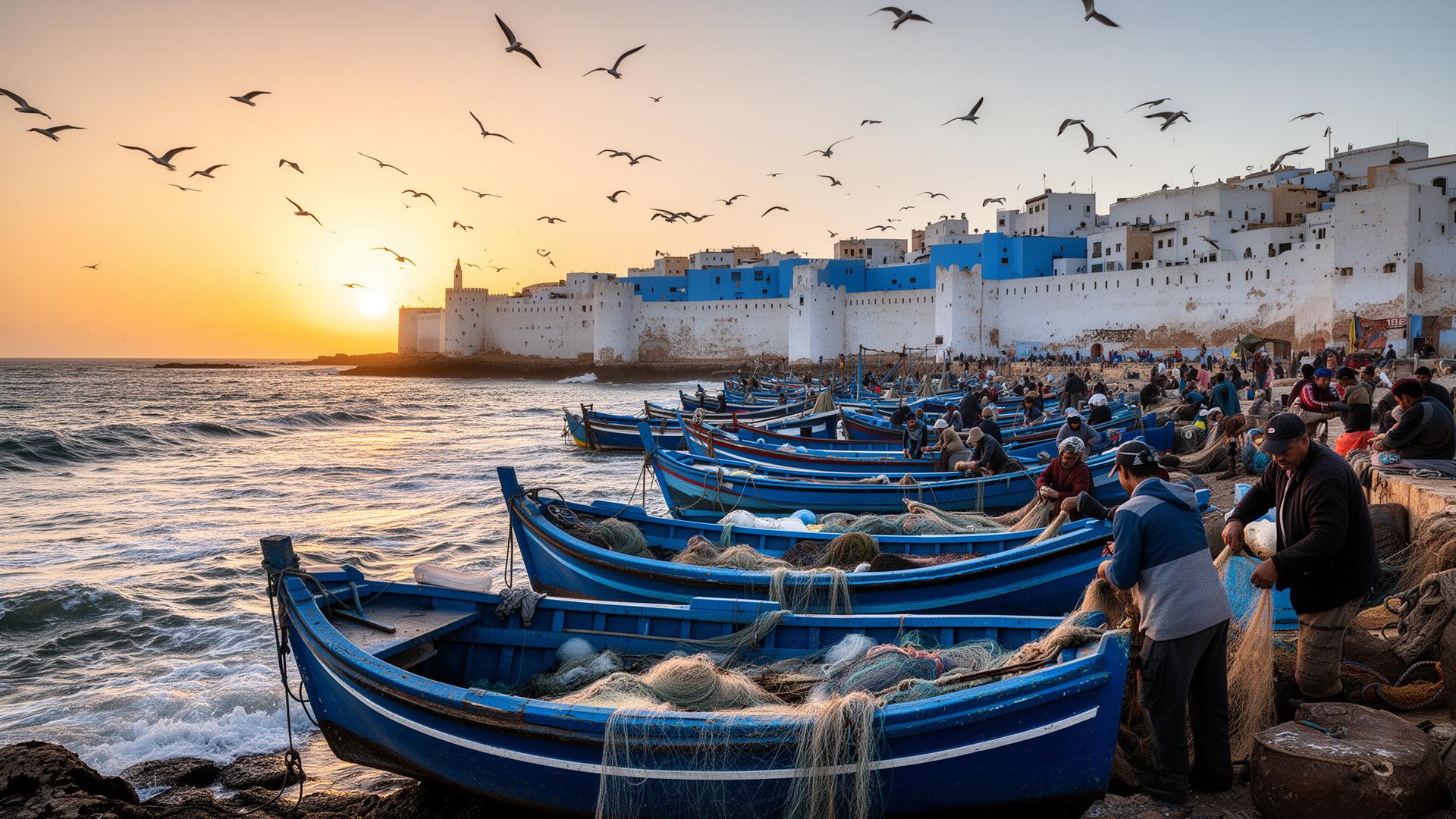
Music runs through Moroccan life, and the country's festival calendar is one of the richest in Africa — from Gnaoua trance on the Essaouira ramparts to sacred music in the palace courtyards of Fes, and from Amazigh celebrations in Agadir to a film festival under the Marrakech stars. This guide introduces the major festivals and the musical traditions behind them. Every festival's exact dates shift from year to year, so treat all months given here as approximate guidance and always check the current year's programme before you book.
In this guide
Morocco's musical traditions
To understand Morocco's festivals it helps to know the music itself, because the country is a genuine crossroads of styles. Centuries of contact between Amazigh (Berber), Arab, Andalusian and sub-Saharan African cultures have produced traditions that you'll hear in the souks, at weddings and on the festival stages alike.
These living traditions are not museum pieces — they evolve, fuse and collaborate with global artists, which is exactly what the big festivals celebrate.
- Gnaoua: hypnotic, trance-inducing music of sub-Saharan origin, led by a mâalem (master) on the guembri (a three-string bass lute) with metal qraqeb castanets; spiritual and ceremonial in roots.
- Andalusian (Al-Ala): refined orchestral music descended from medieval Muslim Spain, central to the heritage of Fes, Tetouan and Rabat.
- Amazigh / Berber: the regional folk music of the Atlas, Rif and Souss — ahwach and ahidous group dances, and the guitar-driven sound that the Timitar festival showcases.
- Chaabi: Morocco's popular street and wedding music — upbeat, rhythmic and everywhere; the soundtrack of everyday celebration.
The major music festivals
Three of Morocco's signature festivals cluster in early summer, which makes June a remarkable month for music lovers — though it also means accommodation in the host cities books out far ahead. Confirm the current year's dates before planning around any of them.
- Gnaoua World Music Festival, Essaouira (around June, varies — check current dates): days of largely free open-air concerts pairing Gnaoua mâalems with international jazz, blues and world artists on the ramparts and medina squares. One of Africa's great music events.
- Fes Festival of World Sacred Music (around June, varies — check current dates): Sufi, gospel, classical and spiritual music from across the world, performed in the gardens and courtyards of old Fes — an intimate, contemplative counterpoint to the bigger festivals.
- Mawazine, Rabat (around June, varies — check current dates): one of the largest music festivals on the planet, drawing huge international pop and Arab stars to multiple stages across the capital, alongside many free concerts.
- Timitar Festival, Agadir (around July, varies — check current dates): a celebration of Amazigh music and its dialogue with world artists, with large free concerts that fill the city.
Film, flowers and the rural calendar
Beyond the music stages, Morocco's festival year takes in cinema, harvests and centuries-old tribal gatherings — many of them in spectacular rural settings that reward travellers willing to leave the main circuit. As with every event here, the precise timing moves year to year.
- Marrakech International Film Festival (around late autumn, varies — check current dates): international and Arab cinema with red-carpet glamour, including open-air screenings; a glamorous late-year fixture in the Red City.
- Rose Festival, Kelaât M'Gouna / Valley of Roses (around May, varies — check current dates): parades, music and rose-water celebrations in the Dadès Valley as the Damask rose harvest comes in — fragrant, authentic and entirely off the mass-tourism trail.
- Erfoud Date Festival (around October, varies — check current dates): a southern harvest festival marking the date crop, with markets, music and folklore on the edge of the desert.
- Imilchil Marriage Festival, High Atlas (around September, varies — check current dates): a famous Amazigh moussem and betrothal gathering of the Aït Haddidou, combining a huge mountain market with music, dancing and tradition.
Planning around the festivals
The single most important practical point bears repeating: Moroccan festival dates are not fixed. Music festivals are set afresh each year by their organisers, harvest festivals depend on the season, and religious and Amazigh moussems can follow lunar or local calendars. Always check the official programme for the current year before committing flights or non-refundable accommodation.
If a specific festival is the reason for your trip, book accommodation in the host city as early as you can — Essaouira during Gnaoua and Fes during the sacred music festival fill up months ahead. If you're simply hoping to catch live music, you barely need to plan at all: chaabi and Gnaoua rhythms spill out of cafés, squares and weddings across the country year-round, and Marrakech's Jemaa el-Fnaa becomes an open-air stage of musicians and performers every single evening.
- Always verify the current year's dates on the official festival programme.
- Book host-city accommodation early for the big-name festivals.
- For everyday music, just wander — Jemaa el-Fnaa and the souks deliver nightly.
Frequently asked
When is the Gnaoua Festival in Essaouira?
It usually takes place around June, but the exact dates change every year and are set by the organisers, so check the current year's official programme before booking. Essaouira's accommodation fills up well in advance for it, so reserve early if the festival is your reason for visiting.
What is the biggest music festival in Morocco?
Mawazine in Rabat is among the largest music festivals in the world by attendance, drawing major international and Arab stars to stages across the capital, typically around June (dates vary year to year — check). Gnaoua in Essaouira and Mawazine are the two best known internationally.
What kind of traditional music will I hear in Morocco?
Mainly four strands: Gnaoua (hypnotic, trance-like music led by a mâalem on the guembri lute with qraqeb castanets), Andalusian or Al-Ala (refined orchestral music with roots in medieval Spain), Amazigh/Berber folk from the Atlas and Souss, and chaabi (Morocco's popular wedding and street music). You'll encounter all of them in everyday life, not only at festivals.
Do I need to plan my trip around a festival to hear live music?
Not at all. While the big festivals are special, live music is woven into daily Moroccan life — Marrakech's Jemaa el-Fnaa hosts musicians every evening, and you'll hear chaabi and Gnaoua rhythms in cafés, squares and at celebrations across the country throughout the year.
Planning a trip?
Let a Marrakech atelier handle the details.
Tell us your dates and style and we'll send a written itinerary and a transparent quote within 24 hours.
Request an itineraryKeep reading
Culture
Morocco Public Holidays & Festivals
Morocco's calendar blends Islamic holy days that shift annually with the moon, fixed national holidays and a rich programme of regional festivals — from the Gnaoua World Music Festival in Essaouira to the rose festival of Kelaât M'Gouna. Knowing the calendar helps you plan around closures and unlock the country's most vivid cultural events.
Planning
Things to Do in Essaouira: The Essential Guide
Essaouira is Morocco's Atlantic counterpoint to Marrakech — a fortified white-and-blue port city with ramparts, a working fishing harbour, outstanding grilled seafood, world-class windsurfing and a medina that is genuinely liveable and calm. Three hours from Marrakech and entirely different in character.
Planning
The Best Time to Visit Morocco
Spring (March–May) and autumn (September–November) are the best all-round times to visit Morocco — warm days, cool evenings and ideal conditions for the medinas, mountains, coast and desert alike.