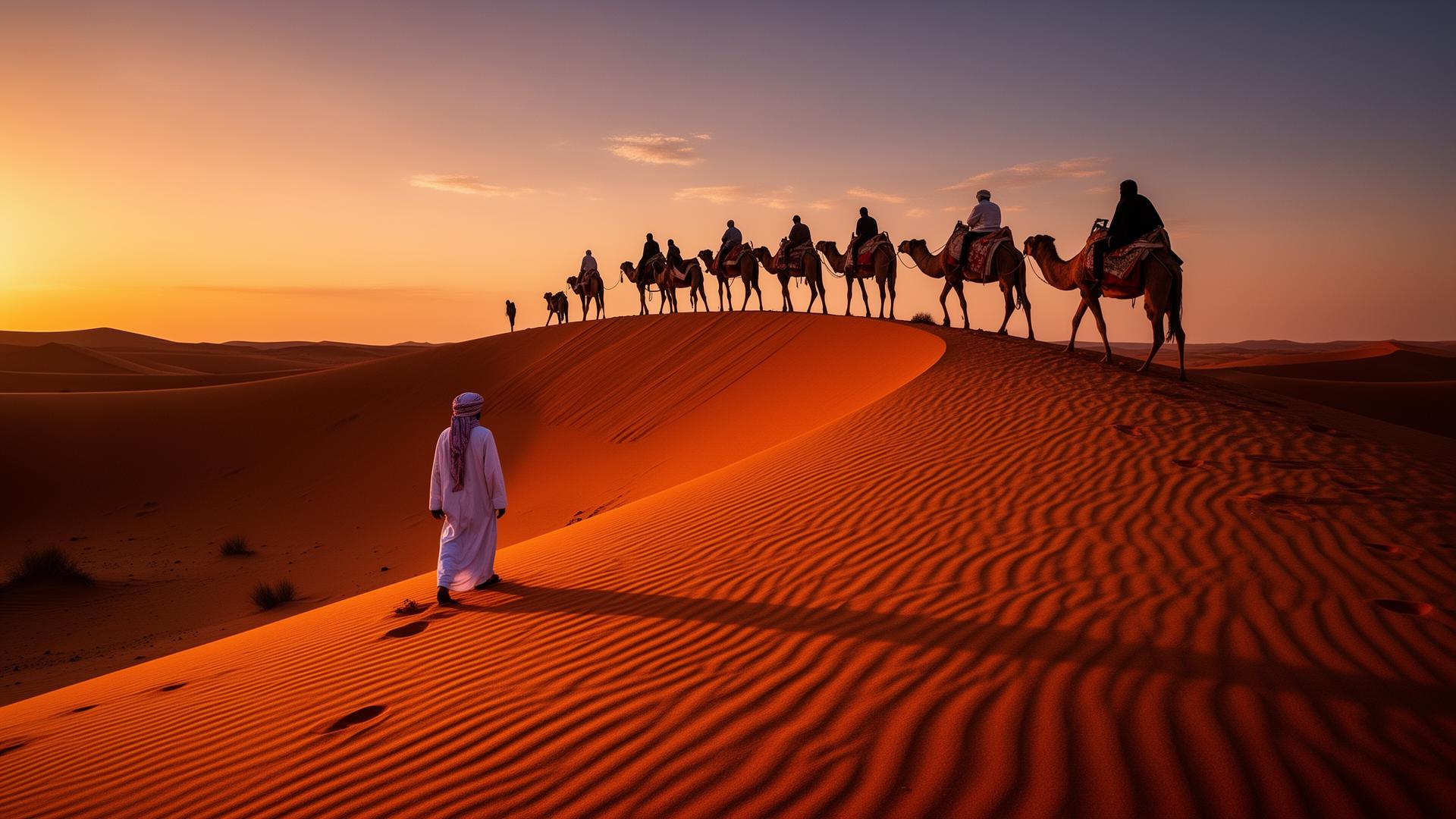
Beyond Agadir and the High Atlas lies one of Morocco's most rewarding and least-visited corners: the Anti-Atlas mountains and the deep south. Walled Taroudant, the pink-granite oasis of Tafraoute and its Painted Rocks, the Berber villages of the Ameln Valley, the silver town of Tiznit, the Spanish Art Deco coast at Sidi Ifni, and the palm oases out toward Tata. This is remote, authentic Morocco — here is what to see and when to go.
In this guide
A remoter Morocco
South of the High Atlas and inland from Agadir, the Anti-Atlas is an older, lower, drier range of pink-and-grey granite and quartzite, dotted with Berber (Amazigh) villages, almond and argan groves, and oases. The deep south beyond it stretches toward the Sahara through palm valleys and small caravan towns. Tourism is light, distances are real, and the rewards are authenticity, striking landscapes and warm, low-pressure encounters. It pairs naturally with Agadir or Marrakech as a starting point.
Taroudant: the 'little Marrakech'
Taroudant, set in the fertile Souss valley, is often called a 'little Marrakech' for its magnificent, well-preserved red-ochre ramparts encircling the old town. It is smaller, calmer and far less touristy than its namesake, with lively souks (Arab and Berber markets), a walkable medina and the option to circle the walls by horse-drawn calèche. It makes a relaxed introduction to the south and a logical first stop from Agadir or Marrakech.
Tafraoute and the Painted Rocks
Deeper into the Anti-Atlas, Tafraoute sits in a bowl of extraordinary pink granite, surrounded by giant rounded boulders that glow at sunrise and sunset. It is the scenic heart of the range and a hub for walking, cycling and scrambling among the rocks. Just outside town are the Painted Rocks — a cluster of large boulders painted blue (and other colours) by Belgian artist Jean Vérame in the 1980s; the paint has faded and been retouched over the years, so expect a weathered curiosity rather than a vivid spectacle.
Tafraoute is also almond country. The almond blossom is one of the region's signatures, typically appearing in late winter — often around February, though the exact timing shifts year to year with the weather, so treat any date as approximate and check locally if blossom is your goal. The town holds an almond festival around this period in some years.
The Ameln Valley and Berber villages
Below the peak of Jbel el Kest, the Ameln Valley strings a series of stone-and-pisé Berber villages along the foot of the mountains, green with almond and argan trees against the bare rock above. It is superb walking country — gentle valley-floor strolls between villages or longer mountain routes with a guide — and one of the best places in Morocco to see traditional Amazigh village life at an unhurried pace. The painted village of Oumesnat and others reward a slow day on foot.
Tiznit and the silver tradition
On the plains between the mountains and the coast, Tiznit is the silver town — Morocco's centre for traditional silver jewellery, with a dedicated jewellers' souk and a long Amazigh metalworking heritage. The town has its own red pisé walls and an unhurried, workaday feel. It is the place to see and buy southern Berber silver, and a natural junction on the way to the coast.
Sidi Ifni and Legzira
On the Atlantic, Sidi Ifni is a faded, atmospheric town of Spanish Art Deco architecture — it was held by Spain until 1969 — with pastel buildings, a breezy seafront and a distinctly Andalusian air. It is a quiet, characterful coastal stop with good seafood and big surf.
Just north lies Legzira (Plage Legzira), long famous for its dramatic natural rock arches over the beach. Be aware that one of the two celebrated arches collapsed in 2016, so the scene is not what older photographs show; the remaining arch and the long red-cliff beach are still a fine sight at low tide and sunset. Check current conditions, as the cliffs here are unstable.
The oases: Tata and the deep south
Push further inland and the Anti-Atlas gives way to true pre-Saharan country: the road toward Tata threads palm oases, old caravan stops, ksour (fortified villages) and rock-art sites, with long empty stretches between. This is for travellers with time, their own transport or a private driver, and an appetite for remoteness rather than sights ticked off a list. It rewards the journey itself.
When to go and how to travel
Autumn to spring (roughly October to April) is the season: warm, clear days ideal for walking among the rocks and villages, with late winter bringing the almond blossom. Summer is very hot inland, so save the Anti-Atlas for the cooler months and keep the coast (Sidi Ifni) for the heat. Nights can be cold in winter at altitude.
Getting around is easiest with a hired car or a private driver, as public transport is sparse and timings loose; buses and grands taxis do link the main towns for the patient. A sensible loop runs Agadir or Marrakech → Taroudant → Tafraoute and the Ameln Valley → Tiznit → Sidi Ifni and Legzira → back up the coast, with Tata as an add-on for those with extra days.
Frequently asked
Where is the Anti-Atlas and is it worth visiting?
The Anti-Atlas is the lower, older mountain range south of the High Atlas and inland from Agadir, running through pink-granite hills, Berber villages and oases toward the Sahara. It is well worth it for travellers seeking remote, authentic Morocco — walled Taroudant, the boulder landscapes of Tafraoute, the Ameln Valley, the silver town of Tiznit and the Spanish-flavoured coast at Sidi Ifni — away from the main tourist circuit.
When is the almond blossom in Tafraoute?
The Anti-Atlas almond blossom typically appears in late winter, often around February, but the exact timing shifts year to year with the weather. Treat any date as approximate and check locally if seeing the blossom is your main aim. Tafraoute holds an almond festival around this period in some years.
Did the Legzira arch collapse?
Yes — one of Legzira's two famous natural rock arches collapsed in 2016, so the beach no longer looks like older photographs. The remaining arch and the long red-cliff beach are still impressive at low tide and sunset, but the cliffs are unstable, so check current conditions before visiting.
How do you get around the deep south of Morocco?
A hired car or private driver is easiest, as public transport is sparse and timetables loose, especially toward remote areas like Tata. Buses and shared grands taxis do connect the main towns — Taroudant, Tafraoute, Tiznit, Sidi Ifni — for patient travellers, but the region rewards the flexibility of your own wheels.
Planning a trip?
Let a Marrakech atelier handle the details.
Tell us your dates and style and we'll send a written itinerary and a transparent quote within 24 hours.
Request an itineraryKeep reading
Planning
Things to Do in Agadir: The Essential Guide
Agadir is Morocco's beach resort capital — rebuilt from scratch after a 1960 earthquake and shaped primarily around its 10 km of Atlantic sand, year-round sunshine and package-holiday infrastructure. It is also the gateway to the Souss Valley, the argan forests and the surf coastline of Taghazout.
Itineraries
The Road of a Thousand Kasbahs
The Road of a Thousand Kasbahs runs south and east from Ouarzazate through the Dadès and Draa valleys — past Skoura, the Valley of Roses, Boumalne Dadès and the great gorges — a landscape of fortified earthen kasbahs and palm oases that most travellers drive on the way to the Sahara.
Planning
Morocco by Region: How to Choose Where to Go
Morocco packs imperial cities, high mountains, the Sahara and two coastlines into one country. This region-by-region overview helps you decide where to focus, since no single trip can cover it all comfortably.
Planning
Trekking the Atlas Mountains: Toubkal, Imlil & Beyond
The High Atlas rises to 4,167 metres at Jbel Toubkal, North Africa's highest peak. Whether you want a single-day walk from Imlil, a multi-day village traverse or a summit attempt, the Atlas rewards it — with the right season, guide and preparation.