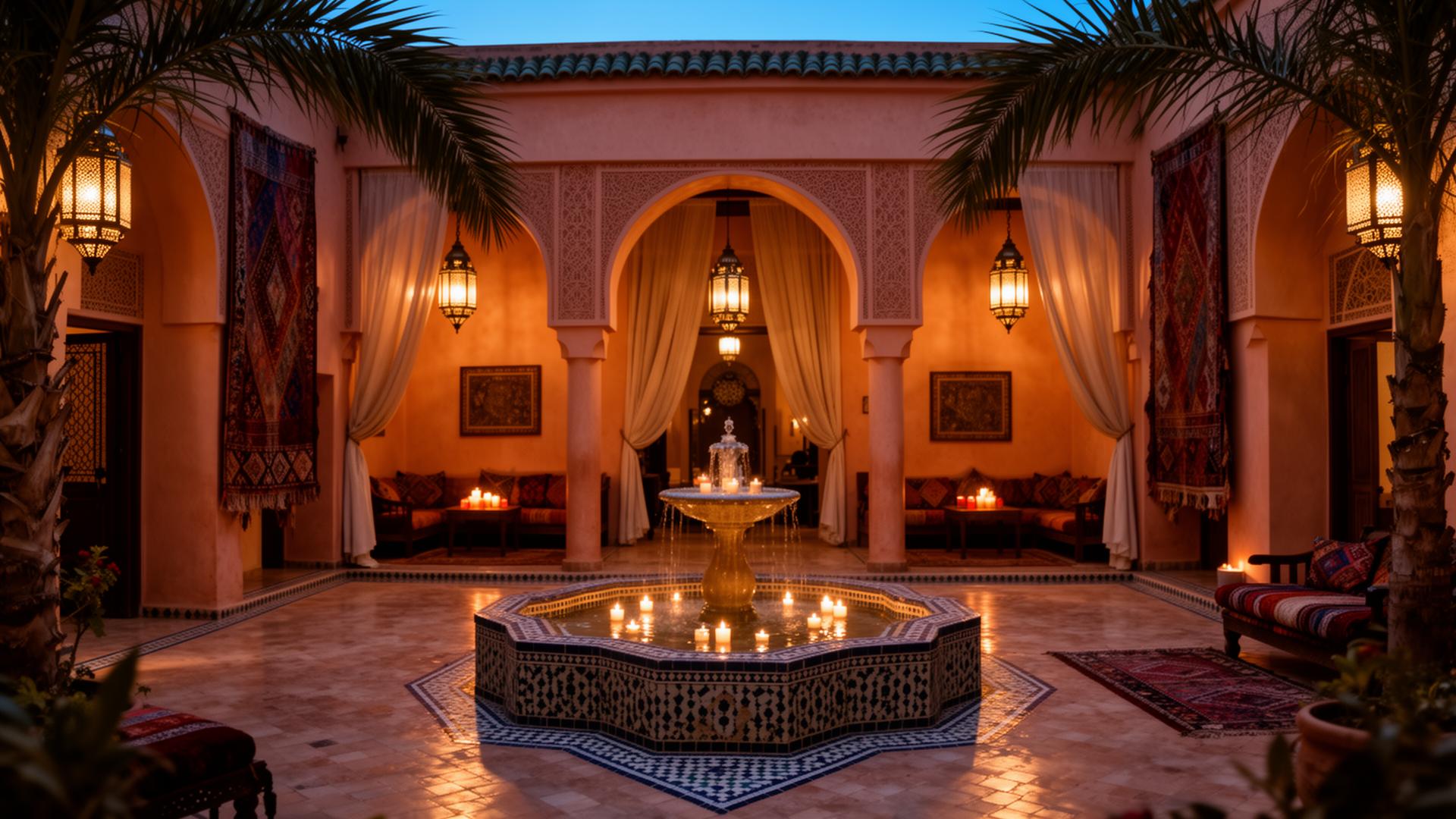
El Jadida

Atlantic coast · Doukkala-Abda

El Jadida, Morocco

El Jadida is Morocco's UNESCO Portuguese city — a 16th-century Atlantic fortress with a miraculous cistern, 90 minutes from Casablanca.

Best time

April–October for the coast; year-round for the cistern

Recommended

Half-day to 1 night

Airport

Casablanca Mohammed V (CMN) + 1h30 drive

Region

Atlantic coast · Doukkala-Abda

El Jadida (formerly Mazagan) is a coastal city of about 150,000 on Morocco's Atlantic coast, roughly 90 km south of Casablanca. It was founded as a Portuguese fortified trading post in 1513 and held by Portugal until 1769, when the retreating garrison blew up much of the town before abandoning it. The Portuguese city — a compact walled quarter — was inscribed as a UNESCO World Heritage Site in 2004, and at its heart lies the Citerne Portugaise: a magnificent 16th-century underground cistern whose vaulted Gothic arches are reflected in a thin film of water covering the floor, creating one of the most atmospheric interior spaces in Morocco. Outside the walls, El Jadida has a long Atlantic beach, a lively promenade and a working port — it functions as both a heritage site and a popular seaside escape for Moroccan families from Casablanca.

What to see

Highlights of El Jadida

01

What is the Portuguese Cistern and why is it so famous?

The Citerne Portugaise (Cisterna de Mazagão) is a 16th-century underground chamber beneath the Portuguese city, originally built as an armoury and later converted to a water reservoir. Five rows of Gothic-Manueline vaulted arches rise from columns above a floor permanently covered in a shallow film of water — the reflections double the apparent height and depth of the space, creating an extraordinary interplay of light and architecture. Orson Welles filmed here for Othello in 1952.
02

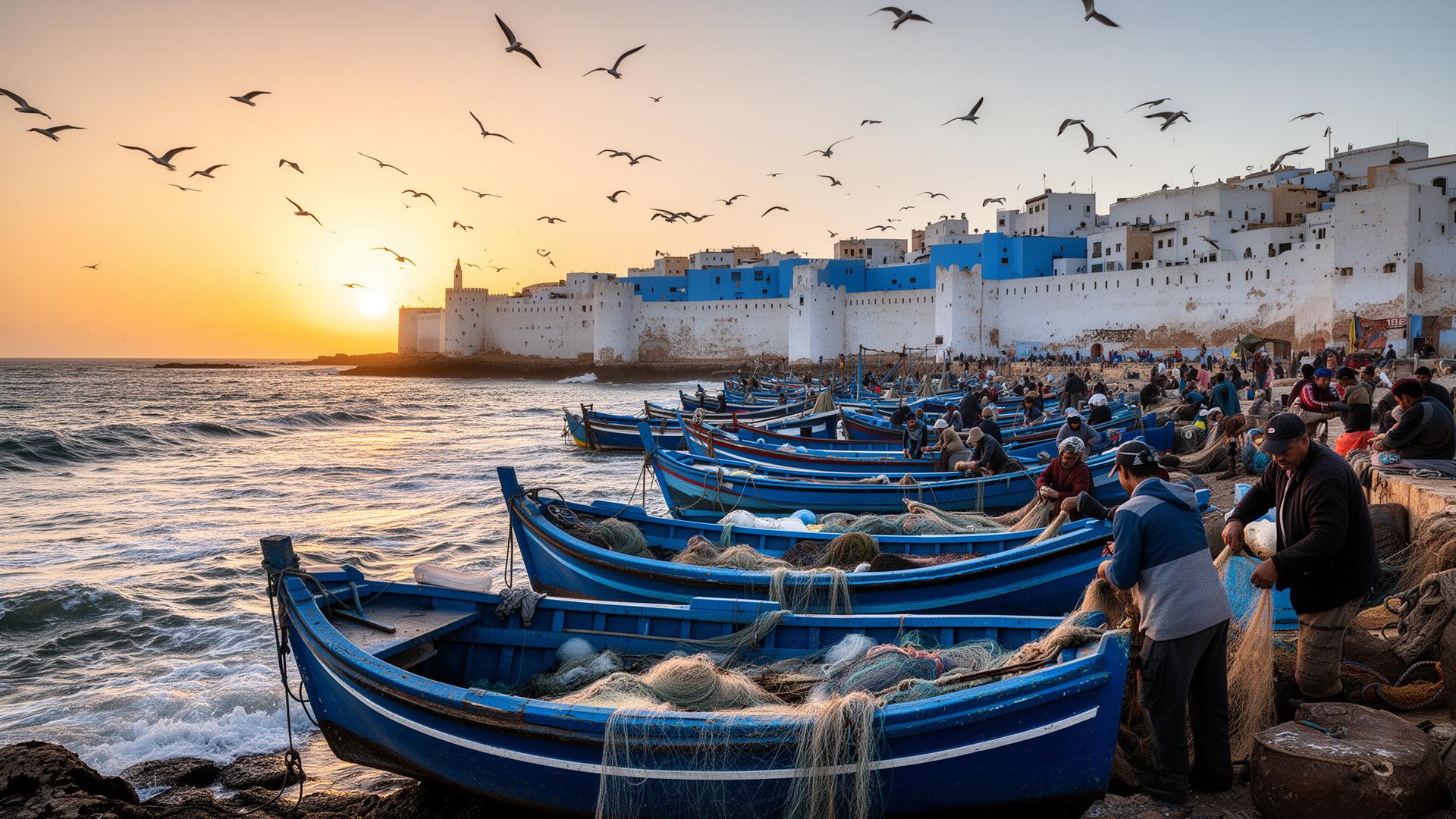
Portuguese ramparts and the Cité Portugaise

The walled Portuguese quarter is one of the best-preserved examples of early modern Portuguese military architecture in Africa: bastions, curtain walls, a church converted to a mosque, and narrow lanes of whitewashed houses within the 16th-century circuit. Walk the rampart top for views over the Atlantic.

03

El Jadida beach and promenade

A wide Atlantic beach stretches north of the old city, backed by a palm-lined promenade busy with families in summer. The water is cooler and cleaner than at Casablanca; the beach is a popular escape for city residents and a calm base for a night on the coast.

04

Moulay Abdallah sanctuary and bird lagoon

Seven kilometres south, the coastal lagoon and estuary at Moulay Abdallah attract wintering waterbirds including flamingos, spoonbills and numerous waders. An annual moussem (pilgrimage festival) here in August is one of the most important equestrian and religious events on the Atlantic coast.

Itineraries

2 tours that visit El Jadida

Every itinerary below is privately operated, fully customisable, and includes a deep stop in El Jadida. Click any tour for the day-by-day plan, the map, dates and pricing.

Before you go

Practical notes

  • Getting there: About 1h30 (95 km) south of Casablanca on the A5 motorway and then the coastal road
  • Cistern opening hours: The Citerne Portugaise is open daily except Tuesday; there is a small admission fee (currently 10 MAD)
  • Best combined with: Oualidia (40 min south for oysters), Safi and Essaouira on the Atlantic coast route

Concierge

Have your El Jadida trip designed by a local

Tell us your dates, group size and pace. We'll send back a written proposal within 24 hours — private guides, transfers, riads, the lot.

Request a proposal →

FAQ

El Jadida — common questions

Is El Jadida worth visiting from Casablanca?+

Yes — the Portuguese cistern alone justifies the 90-minute drive. It is one of the most unusual and beautiful interior spaces in Morocco, and the walled Portuguese city around it is remarkably intact. Pair it with an oyster lunch at Oualidia for a perfect Atlantic day.

What is Mazagan and how does it relate to El Jadida?+

Mazagan was the Portuguese name for the city during their occupation from 1513 to 1769. After the Moroccan sultan Sidi Mohammed ben Abdallah retook it, the city was renamed El Jadida ('the new one'). The UNESCO designation uses both names: 'Portuguese City of Mazagan (El Jadida)'.

Did Orson Welles really film Othello in El Jadida?+

Yes — Welles used the Citerne Portugaise as a location for his 1952 film version of Othello. The atmospheric scene in the cistern, with its reflections and vaulted arches, is among the most memorable in the film. A small plaque in the cistern commemorates the connection.