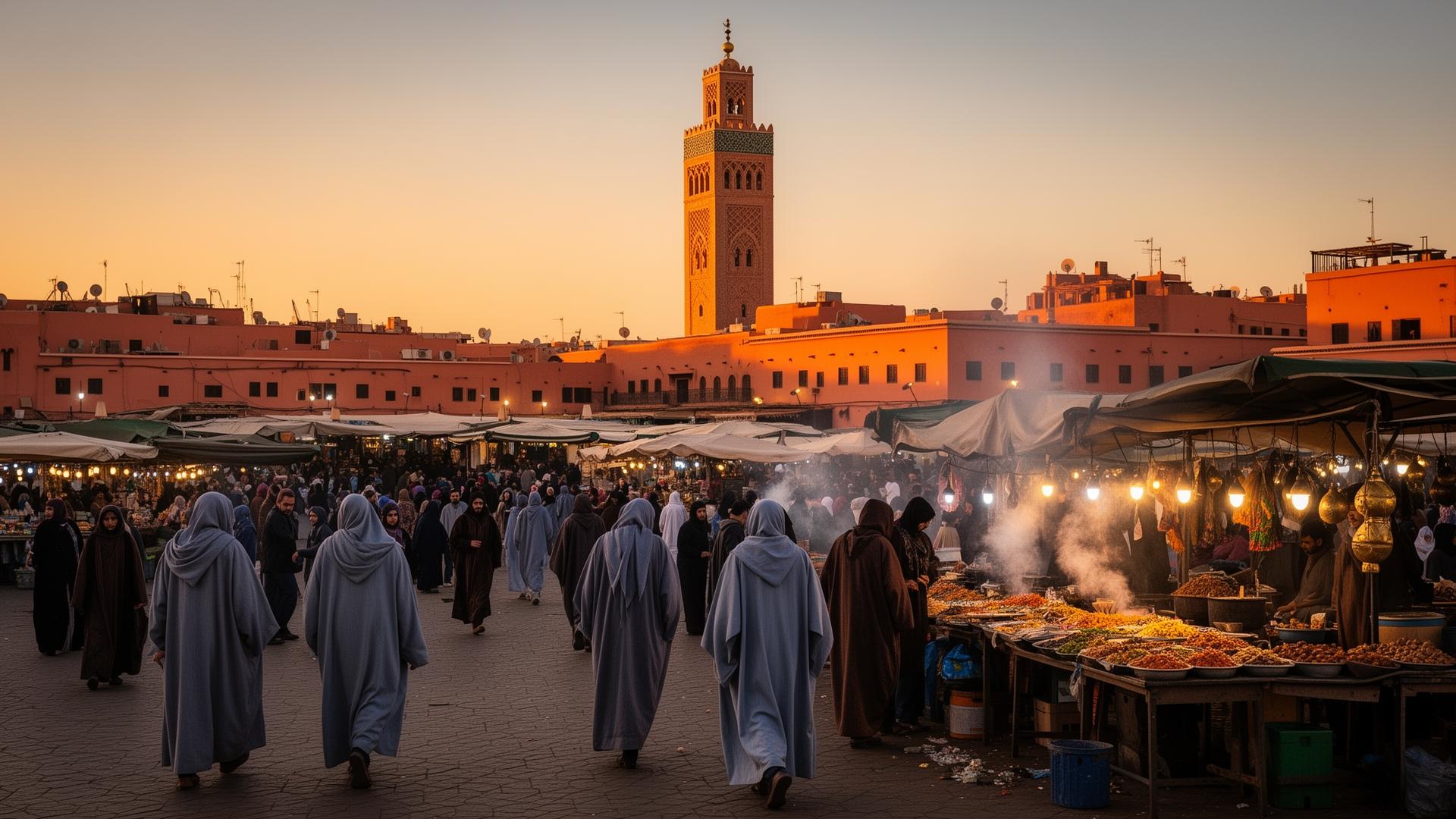
Morocco and Egypt are the two destinations that define the North African travel imagination, and they attract visitors for fundamentally different reasons. Morocco is alive with a layered Islamic and Amazigh (Berber) culture expressed through living medinas — Marrakech, Fes, Chefchaouen — that have been continuously inhabited for over a thousand years. Its landscapes range from the Atlantic coast and the High Atlas (North Africa's highest peak) to the Saharan dunes of Erg Chebbi. The country is compact enough to experience serious variety in 10 days and safe enough for solo travellers, including solo women, across nearly all destinations. Egypt carries an entirely different weight: the Pyramids of Giza, the temples of Luxor and the Valley of the Kings represent one of the most concentrated collections of ancient monuments on Earth — nowhere else can you encounter 5,000 years of continuous civilisation so directly. The Nile cruise between Luxor and Aswan is one of the world's great journeys, and the Red Sea coast around Hurghada and Sharm el-Sheikh offers some of the finest reef diving outside the Indo-Pacific. The two countries share the Arabic language and Sunni Muslim traditions but have almost nothing else in common in terms of landscape, architecture, food or travel experience.
Option A
Morocco
Atlantic and Mediterranean kingdom — medinas, mountains, desert and coast
Best for
Culture seekers, foodies, city explorers, outdoor enthusiasts, first-time Africa travellers
Full guideOption B
Egypt
Nile Valley civilisation — pharaonic monuments, the Red Sea and Luxor
Best for
History and archaeology enthusiasts, divers, those drawn by ancient civilisations
Full guideSide-by-side breakdown
Morocco vs Egypt: how they compare
| Category | Morocco | Egypt |
|---|---|---|
| Ancient monuments | Islamic medieval cities (9th–19th century); Roman ruins at Volubilis; Amazigh prehistoric sites | Pharaonic civilisation (3000 BC–30 BC); Pyramids of Giza; Valley of the Kings; Abu Simbel |
| Landscape variety | Atlantic and Mediterranean coasts, High Atlas (4,167 m), Saharan dunes, argan forest | Nile Valley, Sahara desert, Sinai Peninsula, Red Sea coast; less topographic variety |
| Living culture | 4 UNESCO-listed medinas with intact craft traditions, Amazigh villages, Gnawa music | Cairo's Islamic quarter (Khan el-Khalili), Coptic Christian communities, Nubian villages |
| Food | Tagine, couscous, bastilla, harira, fresh Atlantic seafood — Fassi cuisine is world-class | Koshari, ful medames, kofta, fresh Nile fish, mezze culture; good but less celebrated internationally |
| Safety & ease of travel | Generally safe; petty hassle in souks is manageable; solo female travel widely practised | Tourist sites are generally safe; exercise care in Cairo street navigation; check FCDO advice |
| Diving & snorkelling | Limited — Atlantic is cold; Mediterranean near Tetouan has some sites | World-class — Red Sea coral reefs at Sharm el-Sheikh, Hurghada and Dahab; warm, clear water |
| Flight access from UK/Europe | 40+ direct European routes to Marrakech (RAK); also Agadir, Fes, Casablanca, Tangier | Direct flights to Cairo (CAI), Sharm el-Sheikh (SSH) and Hurghada (HRG) from most UK/EU cities |
| Budget range (mid-range traveller) | $80–$150/day including riad, meals, transport and a guided excursion | $70–$140/day for a Nile cruise package; Cairo and Luxor can be cheaper independently |
Our verdict
Which should you choose?
Morocco is the stronger choice for most first-time Africa or Middle East travellers: it is compact, accessible from Europe in 3–4 hours, extraordinarily varied in landscape and culture, and delivers a complete experience in 10 days without needing to fly internally. Egypt is the non-negotiable destination for those drawn by ancient history at scale — no country on Earth offers what the Nile Valley does for archaeology and monument-hunting, and the Red Sea is among the world's top five diving destinations. If you have to choose: visit Morocco for culture, cuisine, cities and outdoor variety; visit Egypt for pharaonic history, the Nile and world-class diving. Many travellers find one inspires a return trip to the other.
Deep dives
Explore each destination in full
FAQ
Frequently asked questions
Is Morocco or Egypt better for a first trip to Africa?
Morocco is generally considered the easier first Africa trip for European travellers: it is closer (3–4 hours from most UK and European cities), French is widely spoken alongside Arabic, infrastructure for tourism is mature, and the country is politically stable with a well-developed riad and guided tour circuit. Egypt is also manageable as a first trip but requires more logistical planning around internal flights and Nile cruise bookings.
Which country has better food, Morocco or Egypt?
Morocco has a wider international reputation for cuisine: Fassi cooking — bastilla, seffa, mrouzia — is considered among the finest in the Islamic world, and fresh Atlantic and Mediterranean seafood, argan-based salads and the spice-market culture of the souks make food a central part of the travel experience. Egyptian food is honest and filling but less celebrated globally.
Can you see the Sahara in both Morocco and Egypt?
Yes — both countries have Saharan desert regions. Morocco's Erg Chebbi near Merzouga offers 22 km of photogenic dunes up to 150 m high and is easily reached from Marrakech in a 3-day guided circuit. Egypt's Western Desert contains Saharan landscapes including the White Desert near Farafra, though most Egypt visitors focus on the Nile Valley and Red Sea rather than the desert interior.
Is Morocco safer than Egypt for solo female travellers?
Morocco is widely regarded as one of the most accessible North African countries for solo female travellers, particularly in Marrakech, Fes, Essaouira and Chefchaouen. Verbal harassment can occur in souks and medinas; staying in reputable riads and using licensed guides mitigates most friction. Egypt requires similar vigilance in urban areas; tourist sites and organised tours are generally problem-free for solo women.
Which has better beaches — Morocco or Egypt?
Egypt for warm-water swimming and diving: the Red Sea at Sharm el-Sheikh, Hurghada and Dahab has water temperatures of 22–28°C year-round and some of the world's finest coral reefs. Morocco's Atlantic coast — Essaouira, Agadir, Taghazout — offers excellent surfing and kitesurfing but is cooler (18–22°C) and windier. For sunbathing and calm swimming, Egypt's Red Sea coast is superior.
How many days do you need for Morocco vs Egypt?
Morocco rewards a minimum of 10 days to cover the highlights: Marrakech (3 nights), Fes (3 nights), desert circuit (3 nights), plus a coastal stop. A 7-day trip is possible but hurried. Egypt similarly benefits from 10–12 days: Cairo with the Pyramids (2–3 nights), a Nile cruise Luxor–Aswan (4 nights), and the Red Sea coast (2–3 nights). Shorter trips to each are possible but sacrificing depth.
Ready to book?
Let a Marrakech atelier build your itinerary.
Tell us which destinations you want to combine and we'll send a written itinerary and a transparent quote within 24 hours.
Keep comparing
All destination comparisons