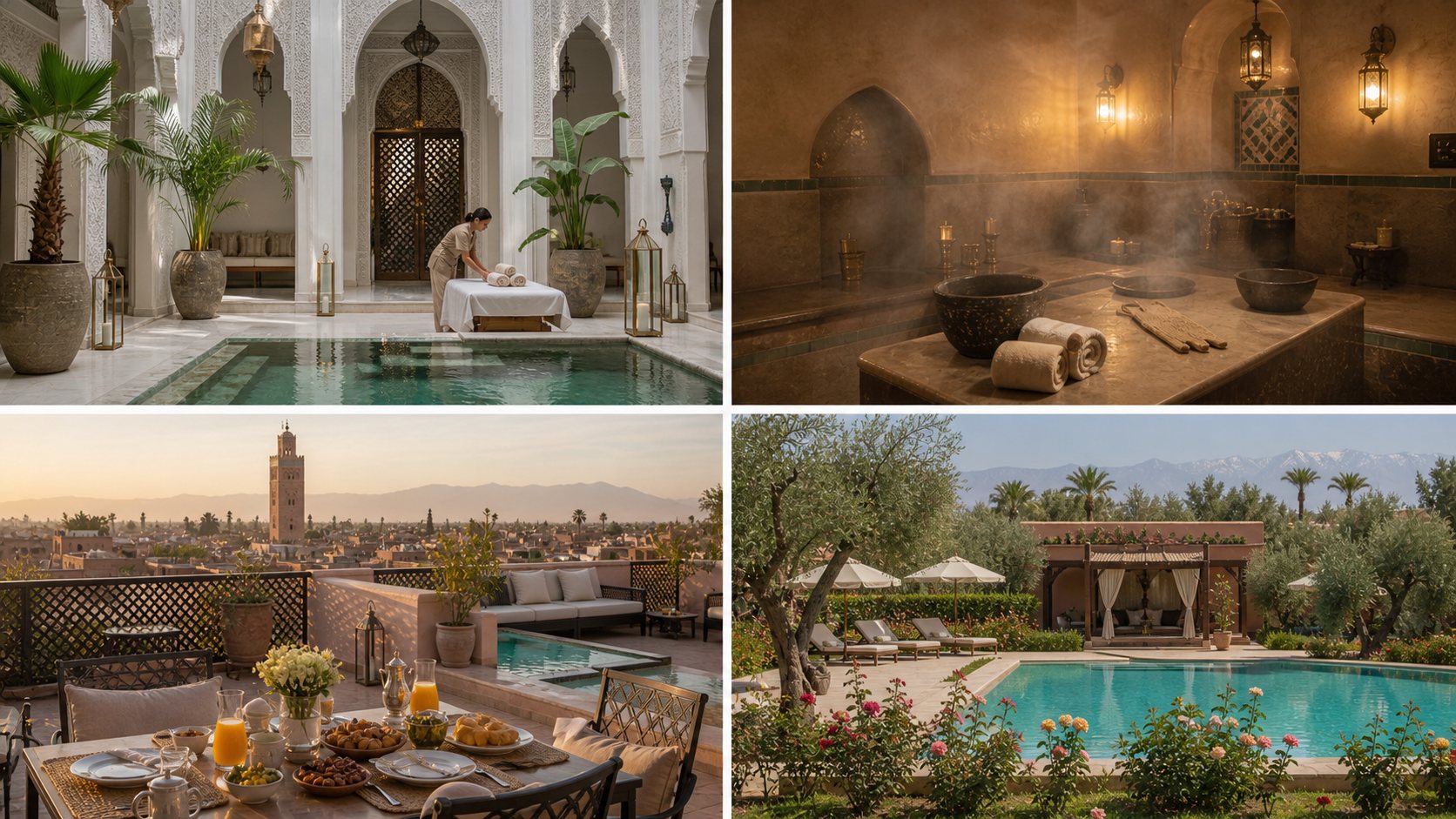
How to pay in Morocco is one of the first practical questions travellers ask, and the short answer is that you will need cash for far more than you might expect. Morocco is still a largely cash-based economy, and its currency, the dirham (MAD), is the everyday essential for daily life. The dirham is also a closed currency, which means you generally cannot buy meaningful amounts of it before you arrive — you get your dirhams in the country itself, from ATMs at the airport and in towns or from exchange bureaux. Once you have cash in hand, it is what makes the authentic Morocco work: the souks, the petits and grands taxis, tips, hammams, small cafés, riads tucked deep in the medina, and rural villages and markets all run on notes and coins, and small denominations are invaluable for haggling and tipping. Cards are not absent — Visa and Mastercard are accepted at upmarket hotels, larger restaurants, supermarkets, malls and some shops in the cities, ATMs are widely available in towns, and contactless is growing — but a card will get you nowhere in a souk stall, a taxi or a mountain village. This is less a contest than a division of labour: cards for the bigger, formal, city-based spends, and cash for everything else.
Option A
Cash (dirhams)
The everyday essential — what most of authentic Morocco actually runs on
Best for
Souks and haggling, petits and grands taxis, tips, hammams, small cafés, medina riads, rural areas and markets
Full guideOption B
Card (Visa/Mastercard)
Convenient for larger, city-based spends where cards are accepted
Best for
Upmarket hotels, bigger restaurants, supermarkets, malls and some city shops; ATM withdrawals
Full guideSide-by-side breakdown
Cash (dirhams) vs Card (Visa/Mastercard): how they compare
| Category | Cash (dirhams) | Card (Visa/Mastercard) |
|---|---|---|
| Where each works | Everywhere in daily life — souks, taxis, tips, hammams, small cafés, medina riads, rural markets | Upmarket hotels, bigger restaurants, supermarkets, malls and some city shops only |
| Getting it | The dirham is a closed currency — get it on arrival from airport/town ATMs or exchange bureaux, not beforehand | Bring your usual Visa/Mastercard; tell your bank you are travelling so payments are not blocked |
| Souks & haggling | Essential — stalls are cash-only and small notes make haggling and paying the agreed price far easier | Not accepted — you cannot pay a souk trader by card |
| Taxis | Required — petits and grands taxis are cash-only; carry small change as drivers may not break large notes | Not accepted in ordinary street taxis |
| Tips & small spends | Keep small notes and coins for tips, hammams, parking attendants and café stops | Impractical for the many small, informal payments of a Morocco trip |
| ATMs & fees | ATMs are widely available in towns; withdraw dirhams in country, though fees vary — check current charges with your bank | Cards may carry foreign-transaction or surcharge fees where accepted — fees vary, check current terms |
| Safety | Carry only what you need for the day, keep notes split between pockets/bag, and use a hotel or riad safe for the rest | Useful for larger payments so you carry less cash; keep cards secure and watch for skimming at unfamiliar ATMs |
| Who it suits | Everyone — no Morocco trip works without cash for daily life | Anyone making bigger, formal payments at hotels, larger restaurants and supermarkets |
Our verdict
Which should you choose?
Carry both — the question is really how to split them rather than which to pick. Cash is the non-negotiable: Morocco is largely cash-based, and you will need dirhams for the souks, the petits and grands taxis, tips, hammams, small cafés, medina riads and anywhere rural, with small notes and coins making haggling and tipping much easier. Because the dirham is a closed currency, withdraw it once you are in the country — from ATMs at the airport and in towns, or at exchange bureaux — rather than trying to buy it beforehand. Keep your card for the bigger, formal spends where it is genuinely accepted: upmarket hotels, larger restaurants, supermarkets and malls in the cities, and for topping up cash at ATMs. Tell your bank you are travelling so your card is not blocked, expect fees to vary so check current charges, and always keep enough cash on hand for the day, since most of the authentic Morocco simply does not take plastic.
Deep dives
Explore each destination in full
FAQ
Frequently asked questions
Is Morocco a cash or card country?
Morocco is still largely a cash-based country, so you will use the dirham (MAD) for most day-to-day spending — souks, taxis, tips, hammams, small cafés, medina riads and rural areas. Cards are accepted in the more formal city settings, such as upmarket hotels, bigger restaurants, supermarkets and malls, but cash remains essential for everyday life. The practical answer is to carry both and rely on cash for the small, informal payments.
Can I get Moroccan dirhams before I travel?
Generally not in any meaningful amount. The dirham is a closed currency, which means it is intended to be obtained inside Morocco rather than exchanged abroad. In practice you withdraw dirhams on arrival from ATMs at the airport and in towns, or change money at exchange bureaux. It is worth getting some cash soon after you land so you can pay for a taxi, tips and your first small purchases.
Where do I actually need cash in Morocco?
Cash is needed across most of daily life: the souks (where stalls are cash-only and small notes help with haggling), petits and grands taxis, tips, hammams, small cafés, riads tucked inside the medina, and rural villages and markets. Carry small denominations, as traders and drivers may not be able to break large notes. Cards simply are not an option in these settings, so always keep enough cash for the day.
Are ATMs easy to find and how much do they charge?
ATMs are widely available in Moroccan towns and cities, so topping up your dirhams as you go is straightforward. Withdrawal and foreign-transaction fees do apply and vary between banks and machines, so check the current charges with your own bank before you travel and be aware some ATMs add their own fee. Tell your bank you are travelling so withdrawals are not blocked, and prefer ATMs at banks where you can.
Should I use cash or card in Morocco?
Use both, but lean on cash. Keep a card for larger, formal payments at upmarket hotels, bigger restaurants, supermarkets and malls in the cities, and for withdrawing dirhams at ATMs. Use cash for everything else — the souks, taxis, tips, hammams, small cafés and rural areas — and keep plenty of small change. Most of the authentic Morocco runs on cash, so never rely on a card alone for your daily spending.
Ready to book?
Let a Marrakech atelier build your itinerary.
Tell us which destinations you want to combine and we'll send a written itinerary and a transparent quote within 24 hours.
Keep comparing
All destination comparisons